












Point-of-Care Ultrasound (POCUS): How to Pick a Bedside Scanner You’ll Actually Use

Last updated: November 2026 · Prices checked against public listings and dealer quotes
Point-of-care ultrasound (POCUS) is ultrasound you perform and interpret yourself at the bedside, to answer one clinical question while the patient is in front of you. It doesn’t replace a formal study read by radiology or cardiology. It gets you a faster answer to a narrower question.
Few clinicians regret starting POCUS. Plenty regret the specific device they bought. The complaints tend to repeat: the image falls apart on bigger patients, or the battery dies halfway through clinic. A subscription lapses and Doppler disappears. Or scans never reach the chart, so nothing gets billed.
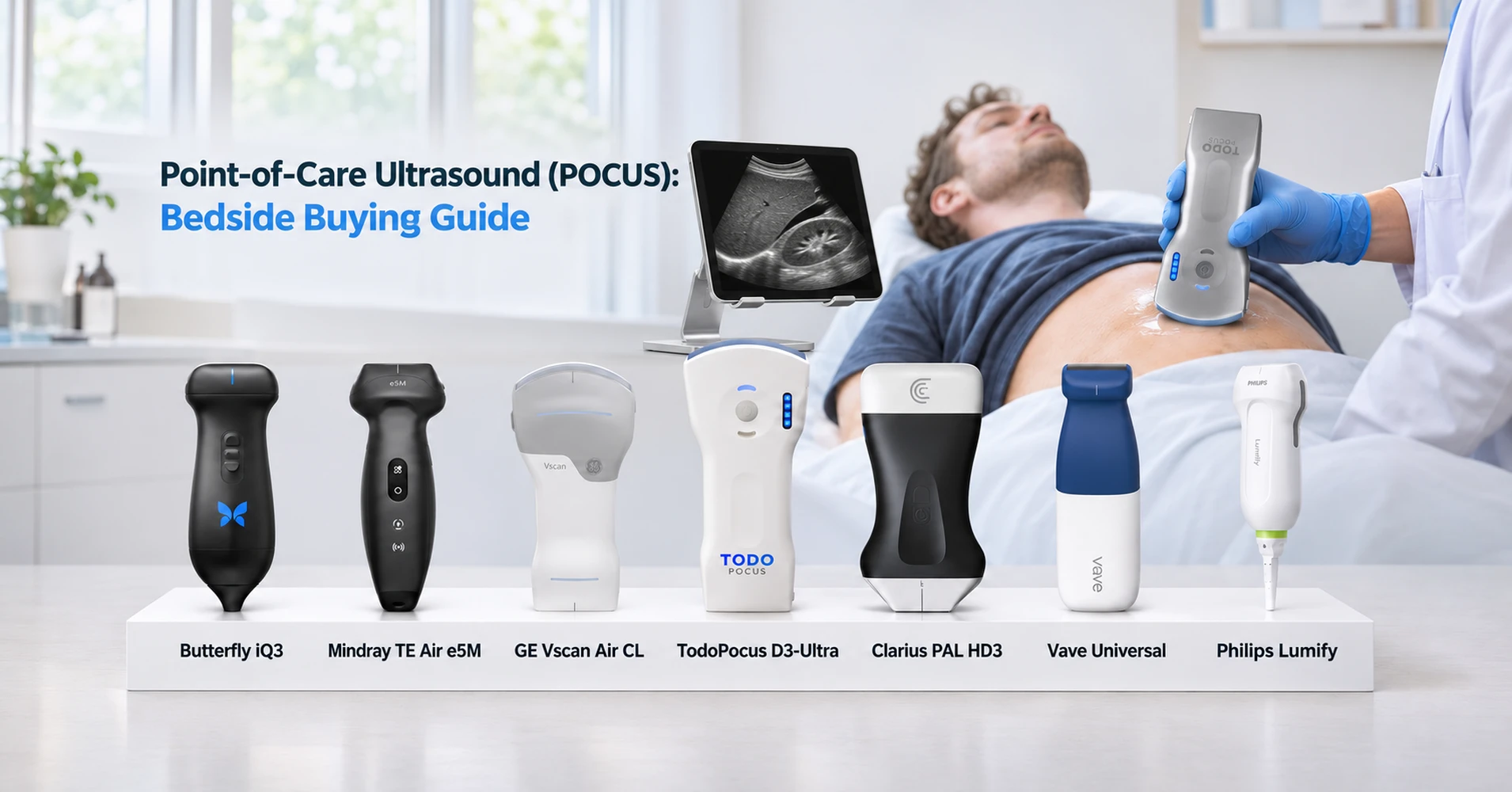
This guide works backward from those problems. For each one, we look at what you’ll notice in the exam room, what usually causes it, and how to choose around it. Then we compare eleven current handhelds by category, with specs, plans and trade-offs.
Four Questions Worth More Than Any Spec Sheet
- How does the image hold up on your hardest patients? Not a slim volunteer: your heavy abdomens and tight rib spaces.
- Will it be charged, connected and in your hand when you need it? Battery, pairing and cables matter most on your busiest days.
- Will your scans make it into the chart? And will that still work if you stop paying a subscription?
- How many of your exams does one purchase cover? One probe, two or three changes what you actually end up buying.
Table of Contents
What Point-of-Care Ultrasound Means in Practice
The term gets used loosely, so it helps to pin down what makes a scan “point-of-care.” It isn’t the size of the machine. It’s who scans, why, and how the result is used.
| Point-of-Care Ultrasound | Comprehensive / Consultative Ultrasound | |
|---|---|---|
| Who scans and interprets | The treating clinician, at the bedside | A sonographer scans; radiology or cardiology reports |
| The question | One focused question: fluid or not, needle in place or not | A full evaluation of an organ or system |
| Timing | Real time; the answer changes care on the spot | Scheduled or queued; report comes later |
| Documentation | Saved images plus a short report | Full report archived to PACS |
| Typical billing | Limited exam or procedural guidance codes | Complete exam codes |
That distinction matters when you buy. A POCUS device doesn’t need every feature of a radiology cart. It needs to answer your questions reliably, on your patients, fast enough to change what you do next.
It also matters whether your scanning is mostly diagnostic or mostly procedural. Diagnostic questions lean on depth and acoustic windows. Procedures lean on near-field detail, needle visibility and a probe that fits cleanly into a sterile setup. Many of us need both, which is where most of the trade-offs come from.
Point-of-Care Ultrasound Machines: The Three Main Types
Before comparing brands, it’s worth deciding which type of device fits the way you work. Most buying mistakes start with picking a model before the category.
| Wireless Handheld | Cabled or Tablet-Based Handheld | Compact / Laptop Console | |
|---|---|---|---|
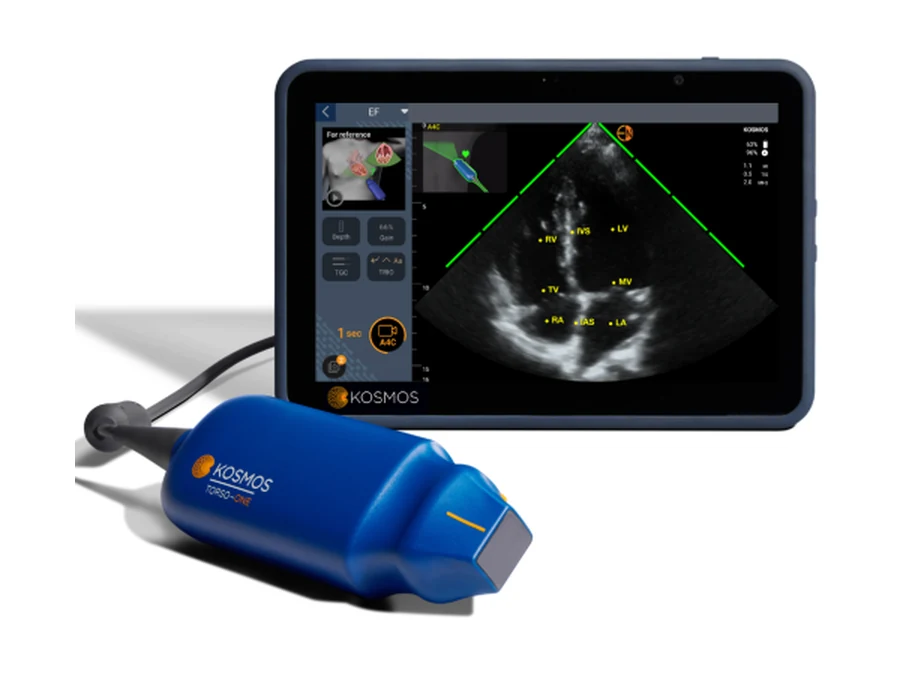
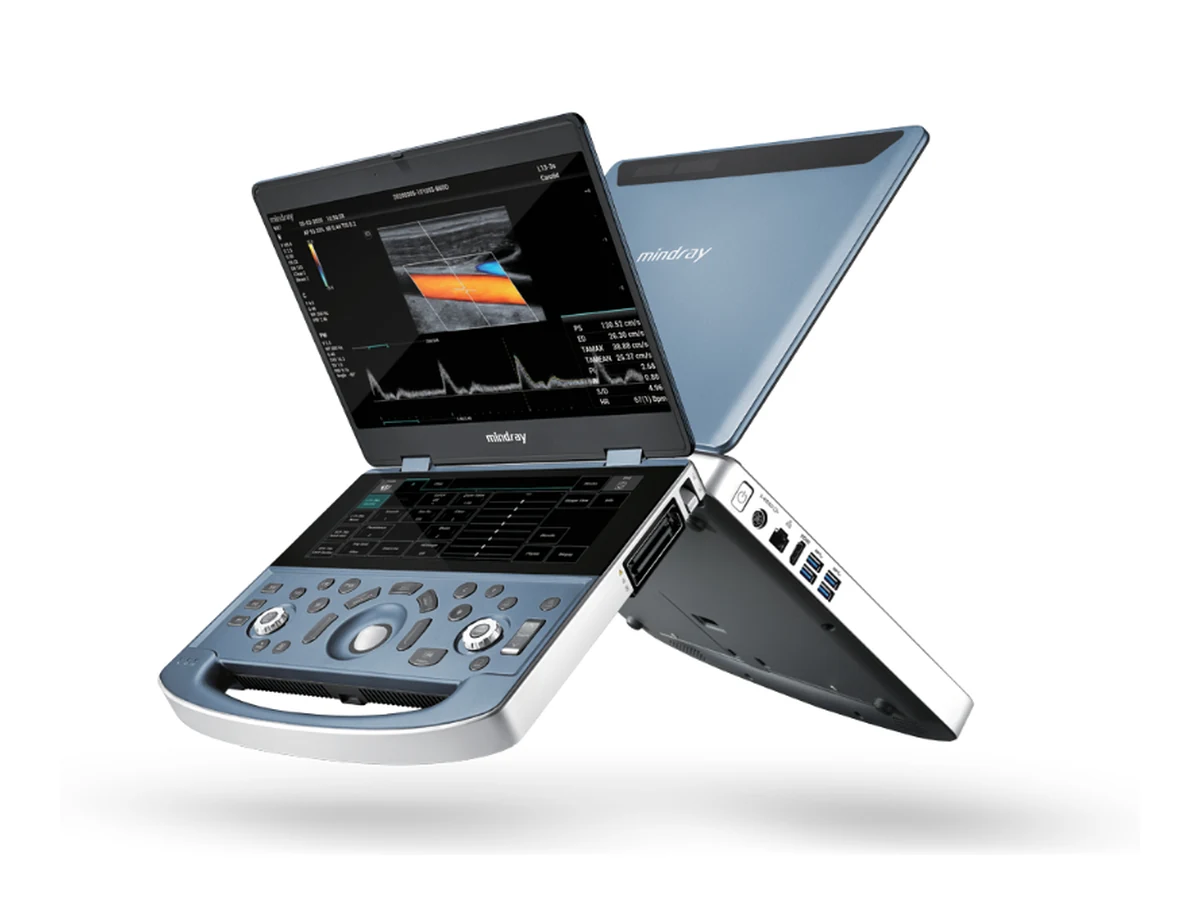
| Examples | GE Vscan Air, Clarius HD3, Mindray TE Air, Vave, TodoPocus | Butterfly iQ3, Philips Lumify, EchoNous Kosmos | GE LOGIQ e series, Sonosite MT / PX, Mindray MX7 |
| Screen | Your own phone or tablet | Phone or tablet; Kosmos runs on tablets or Kosmos Bridge | Built-in display |
| Probes | One array, or several arrays in one housing | Usually bought one transducer at a time | Several ports for specialty probes |
| Advanced cardiac (CW, TDI, ECG gating) | Most stop at Color and PW. CW: TodoPocus PD2. TDI: Mindray TE Air i3P ($500 add-on). No ECG gating. | CW and TDI: EchoNous Kosmos. Lumify offers Color and PW only. No ECG gating. | CW and TDI are common; ECG gating and TEE probes on cardiac-capable systems such as the Mindray MX7 |
| Several exam rooms at once | Yes. Each clinician or room gets a probe paired to its own phone. | Possible, but each probe needs its own phone or tablet and cable. | No. One system serves one room and gets wheeled between rooms. |
| Typical budget | $1,900–$5,000 for most models; $6,699+ for the TE Air i3P | $3,899–$5,399 (Butterfly); ~$6,000+ per Lumify transducer; $7,700 to under $21,000 (Kosmos) | From ~$4,500 refurbished; ~$8,000–$14,000 for entry new models; $25,000–$60,000+ for new name-brand systems |
Rule Out a Handheld First
A few jobs still need a console, whatever the handheld brochure says. If any of these is part of your regular week, start with consoles:
- TEE. It needs a dedicated transesophageal probe and a system built to drive it. No handheld supports it.
- ECG-gated echo. Timing-dependent measurements in a complete echo study rely on it.
- Several specialty probes in one day. Convex, high-frequency linear, endocavity and phased on one system.
- Complete studies with full reports. Billing complete exams calls for full measurement packages and reporting.
One honest caveat: CW and tissue Doppler alone don’t force you onto a console anymore. If CW is all you’re missing, a handheld can still cover you. More on that under Question 4.
For most other bedside work, a handheld fits a solo practice, emergency bay or small clinic better. Most POCUS scans answer one question, and the device needs to move with you between exam rooms or on house calls. The rest of this guide focuses on handhelds. If you’re still weighing consoles model by model, our portable ultrasound machines compared covers both, and our ultrasound machine cost guide breaks down new and refurbished console pricing.
Question 1: How Does the Image Hold Up on Your Hardest Patients?
Your easy patients will look fine on almost any probe. So start with the one or two scans that give you trouble today, and let those decide the array.
| Your Hardest Case | What Decides the Image | Look For | Models That Fit |
|---|---|---|---|
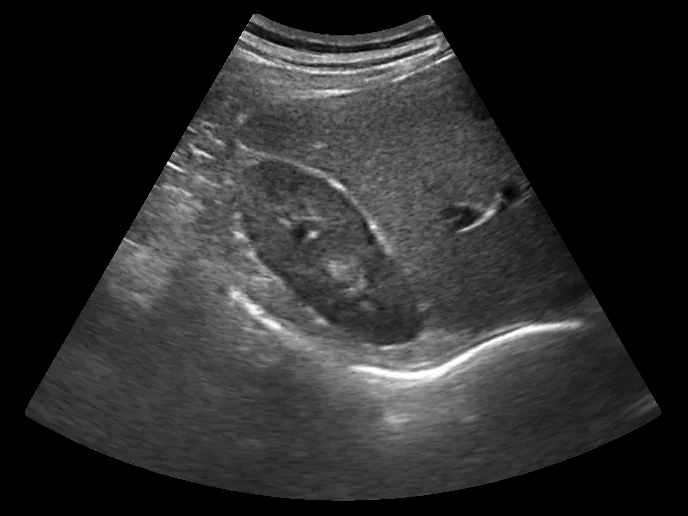
| Deep abdomen on high-BMI patients | Signal at low frequency | A dedicated convex or phased array starting around 2–3 MHz, with depth well past 20 cm | GE Vscan Air CL; Clarius C3 HD3; TodoPocus D3-Ultra (to about 30 cm); Vave Phased; Philips Lumify C5-2 |
| Cardiac views between narrow ribs | Face size and a true phased array | A dedicated phased array; check the face size in millimeters | GE Vscan Air SL; Clarius PA or PAL HD3; TodoPocus PD2 or CD2; EchoNous Kosmos Torso NXT / Torso-One (20.7 × 16 mm face) |
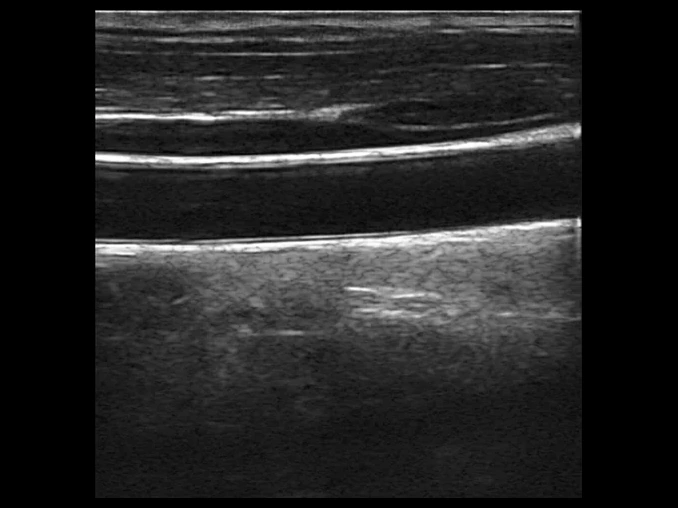
| Small nerves, tendons, superficial vessels | Top linear frequency | 12–15 MHz or higher; 10 MHz is fine for IVs and most joints | Clarius L15 HD3; Philips Lumify L12-4; TodoPocus L14Pro (10/14 MHz) |
| Facial vessels and dermis | Very high frequency and a narrow face | 18–24 MHz linear | Clarius L20 HD3; TodoPocus L20Pro (16/20 MHz, 25 mm face; 24 MHz L24Pro for very shallow dermal work) |
| Long Doppler runs or long procedures | Heat and battery | 2+ hours per charge, a swappable battery, or no probe battery at all | Mindray TE Air, Butterfly iQ3 and TodoPocus D3-Ultra (about 2 h each); Vave (swappable); Philips Lumify (powered by phone or tablet) |
A few models need care for specific jobs. Mindray TE Air e5M’s linear mode stops near 8 MHz, and Vave tops out at 8 MHz, so neither is a fine-nerve probe. Butterfly iQ3 covers the whole body with one chip, but its flat face is less comfortable between ribs than a dedicated phased array. GE Vscan Air CL’s 64 mm curved face works well on adult abdomens and feels awkward on narrow chests. And if your hardest cases include both deep abdomen and heart, a single-array scanner means buying two. See each model’s full profile below ↓
How to Read Reviews and Sample Images
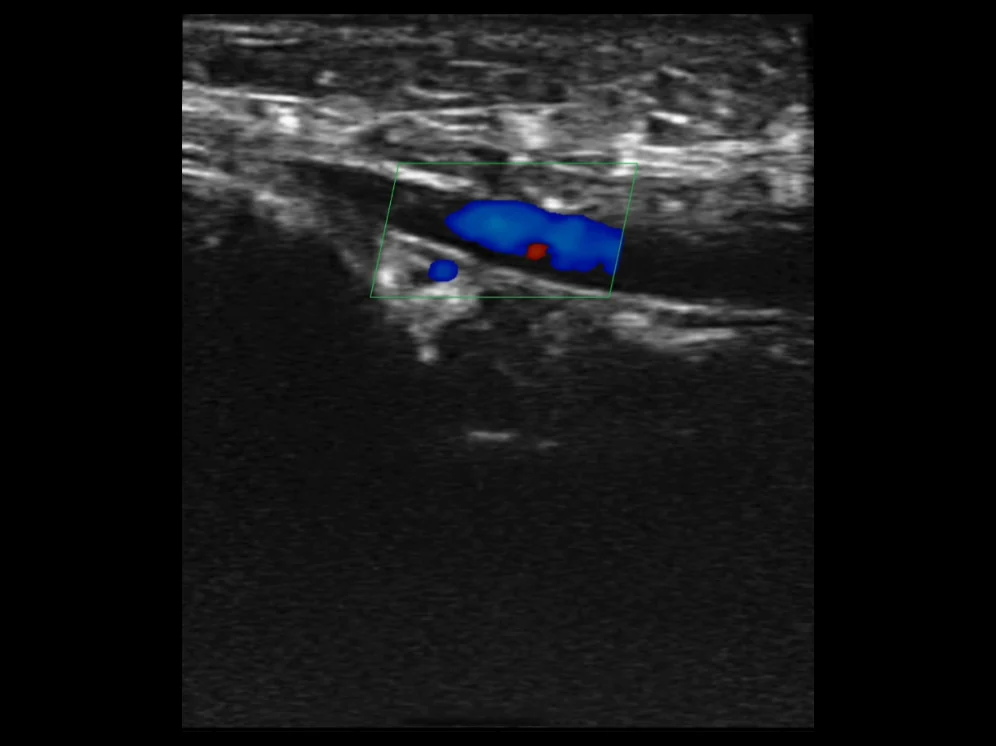
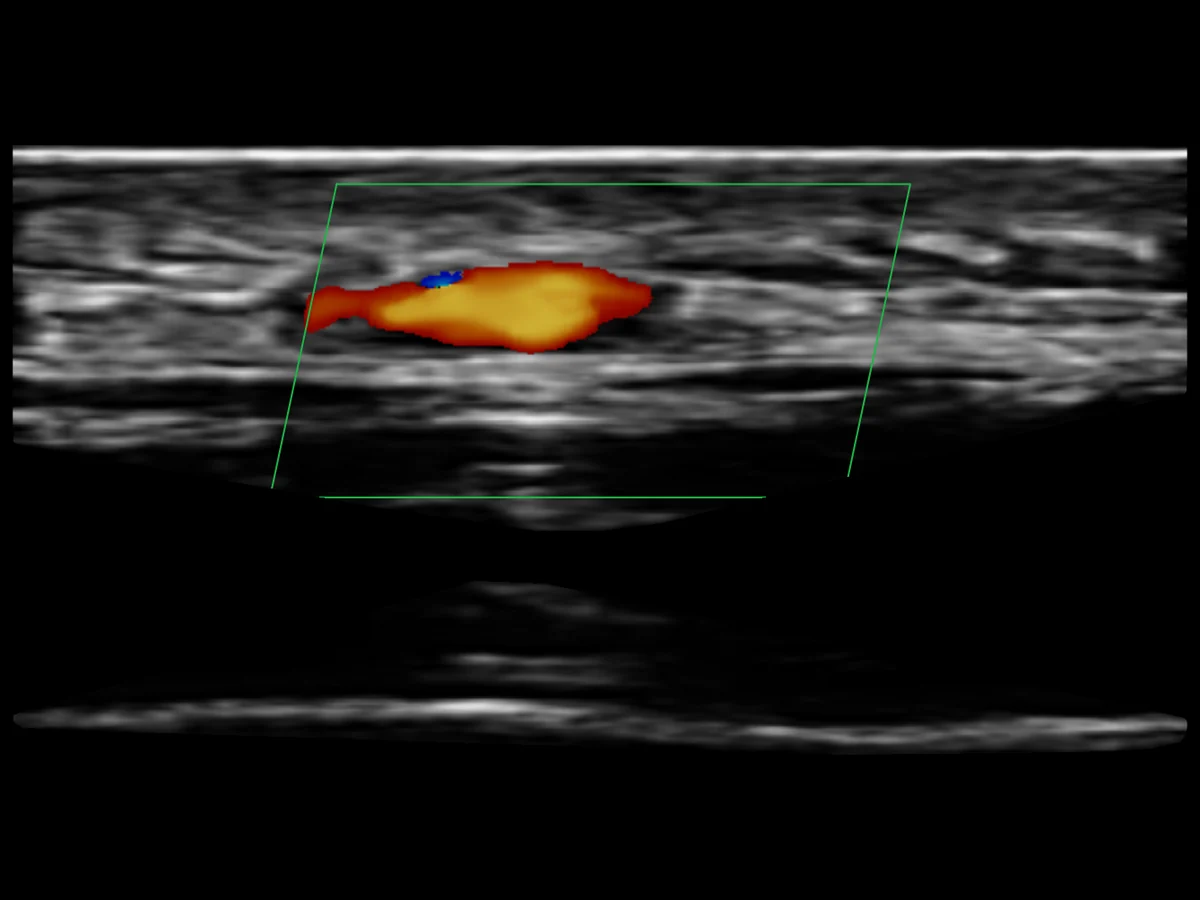
Brand images are usually made on easy patients and phantoms. They’re still useful if you read them the right way.
- Check the depth scale. A crisp liver at 12 cm tells you nothing about 20 cm. Find the depth marker at the side of the image.
- Prefer cine loops over still frames. A single frame hides noise and frame rate. A clip shows both.
- Check which probe made the image. Brand galleries mix models and arrays. A beautiful superficial image may come from a 20 MHz scanner you aren’t buying.
- Look for clinician reviews on real patients. Cases from everyday clinics, including heavier patients, tell you more than polished brand clips.
Spec Sheet Numbers That Actually Predict the Image
Not every number on a spec sheet matters equally. These are the ones that line up with what you’ll see:
- Lowest frequency of the deep array. A range starting near 2 MHz penetrates better than one starting at 3–4 MHz.
- Maximum depth. Treat it as a ceiling, not a promise. Look for a figure well above the depth you actually work at.
- Top linear frequency. Your best single predictor of near-field detail.
- Element and channel counts. More active channels generally mean more signal at depth and in Doppler. Brands that publish these numbers are easier to compare.
- Face size in millimeters. The only spec that tells you whether a probe fits between ribs or on a small patient.
- Runtime per charge. Under an hour means you’ll be watching the battery on a full clinic day.
Buy With a Way Out
If you’re ordering without trying the probe first, the return and warranty terms matter. Check for a trial period or return window before you buy. Then use it on your hardest patients in the first two weeks, not your easy ones.
GE Vscan Air and Mindray TE Air come with 3-year warranties, TodoPocus offers a 30-day trial and a 3-year warranty, and EchoNous Kosmos transducers carry 5 years in the U.S. For any brand, ask who pays return shipping and whether a software plan is refundable if you send the probe back.
Question 2: Will It Be Ready When You Need It?
For most of us, this comes down to two things. Will the probe last through a full day of patients? And will it be ready the moment you pick it up?
Where Wireless Probes Let You Down
The most common letdown is a flat battery mid-clinic. Runtime varies widely. GE Vscan Air runs about 50 minutes per charge, and Clarius HD3 about 60. Mindray TE Air and TodoPocus D3-Ultra run about 2 hours. Vave sidesteps the problem with a removable battery you can swap between patients.
If you see patients back to back, a sub-hour battery means charging between visits. The simplest habit is treating it like your phone: the probe goes on the charger when clinic ends. On shared department probes, assign a dedicated charging spot and check it at shift change.
Pairing is the second issue. Most wireless probes take a few seconds to a dozen seconds to connect. Turning the probe on as you walk into the exam room avoids most of the wait.
The third issue is less obvious. Many Wi-Fi probes connect directly to your phone, so the phone may drop off the clinic network while you scan. Uploading to the EHR then waits until you disconnect. It’s worth checking on the specific model.
Where Cables Get in the Way
Host-powered cabled probes such as Philips Lumify and EchoNous Kosmos never need charging, which is a real advantage on long days. Butterfly iQ3 is the exception: it connects by cable for data, yet still runs about 2 hours on an internal battery that recharges on a separate contact dock (the phone cable doesn’t charge it).
Either way, the cost is the cord itself. It needs a longer sterile cover for procedures and gets in the way during injections or chest compressions. Host-powered models also drain the phone or tablet they plug into. Philips Lumify needs an extra power module for iPhone and iPad, and works only with devices on Philips’s compatibility list.
| In the Exam Room | Wireless | Cabled |
|---|---|---|
| During procedures and resus | Nothing to route around compressions or the sterile field | Cord has to be kept clear of the bed and sterile field |
| Sterile cover | One cover over the whole probe | Longer cover to sheathe the cable |
| Power | Probe battery; needs a charging habit (or spare pack on Vave) | Host-powered on Lumify and Kosmos; Butterfly iQ3 uses a ~2 h internal battery |
| Phone network while scanning | May drop off clinic Wi-Fi on some models | Unaffected |
| Cleaning | Fewer seams; most are IP67, Mindray TE Air is IP68 | Extra attention at the cable joint |
Options That Sit in Between
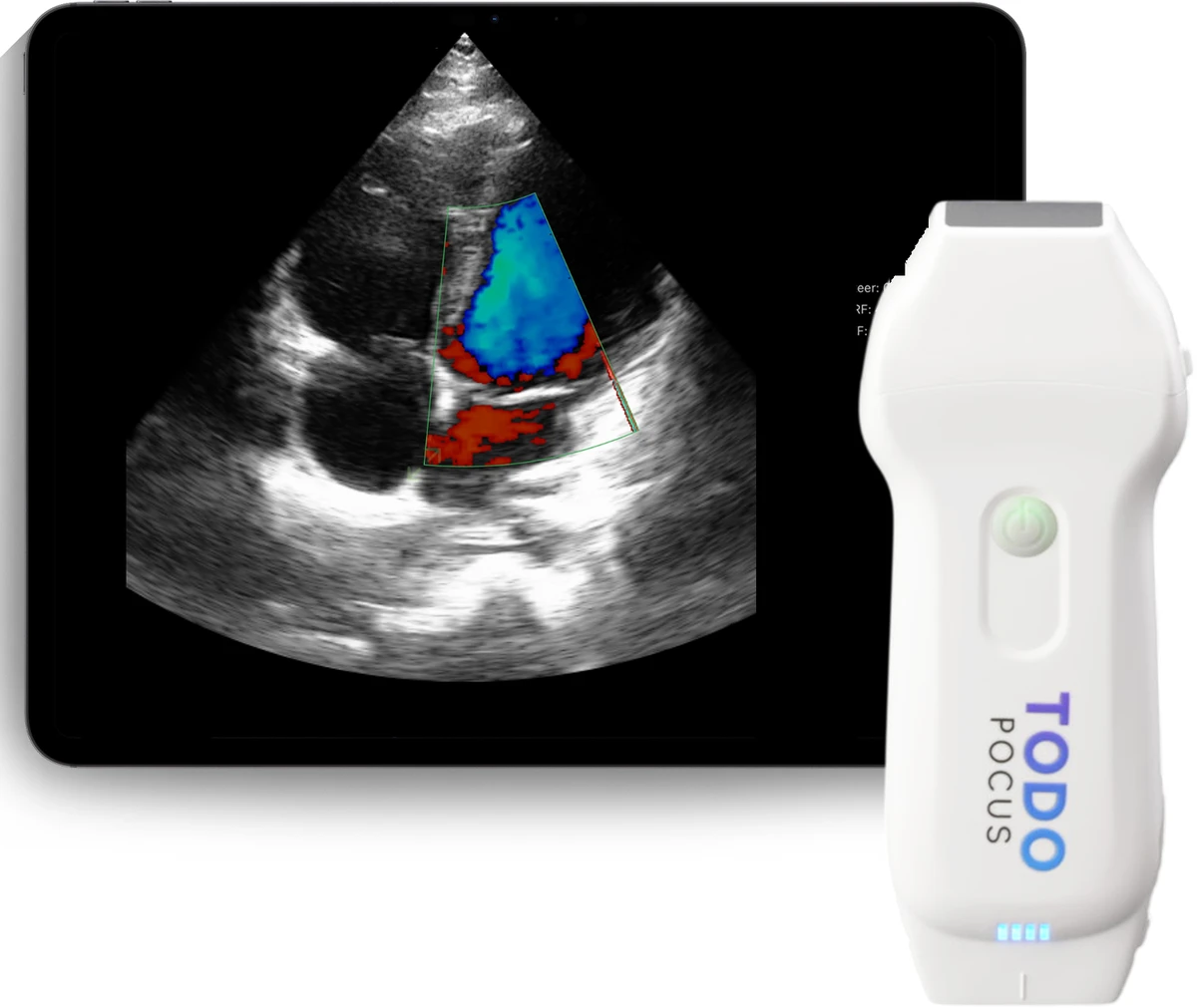
Some probes let you choose. The TodoPocus™ CD2 ($2,350) pairs a 2.2/3.6 MHz phased array with a 7.5/10 MHz linear array in a 150 g body. It connects over Wi-Fi or USB cable, on iOS, Android and Windows, and scans about 1.5 hours per charge. It has no convex array, so deep abdominal and OB work isn’t its strength, and there is no CW Doppler.
Procedures: Seeing the Needle Tip
For nerve blocks, joint injections and difficult IVs, seeing the needle tip matters more than whether there’s a cable. Most of us rely on in-plane technique, sometimes helped by software needle enhancement. Magnetic tracking is another route.
The TodoPocus™ L10H-Guide ($2,870) takes the magnetic route. Its built-in needle navigation shows the projected needle path in real time, freehand, with no physical needle guide bracket to buy or attach. It scans over Wi-Fi only and charges by USB cable; see its full profile below.
On the brand-name side, the Clarius L15 HD3 ($3,795) is a popular high-frequency linear for blocks and MSK injections, with Needle Enhance included in its Essentials plan. Our vascular access ultrasound guide compares these approaches in more detail.
House Calls, EMS and Field Work
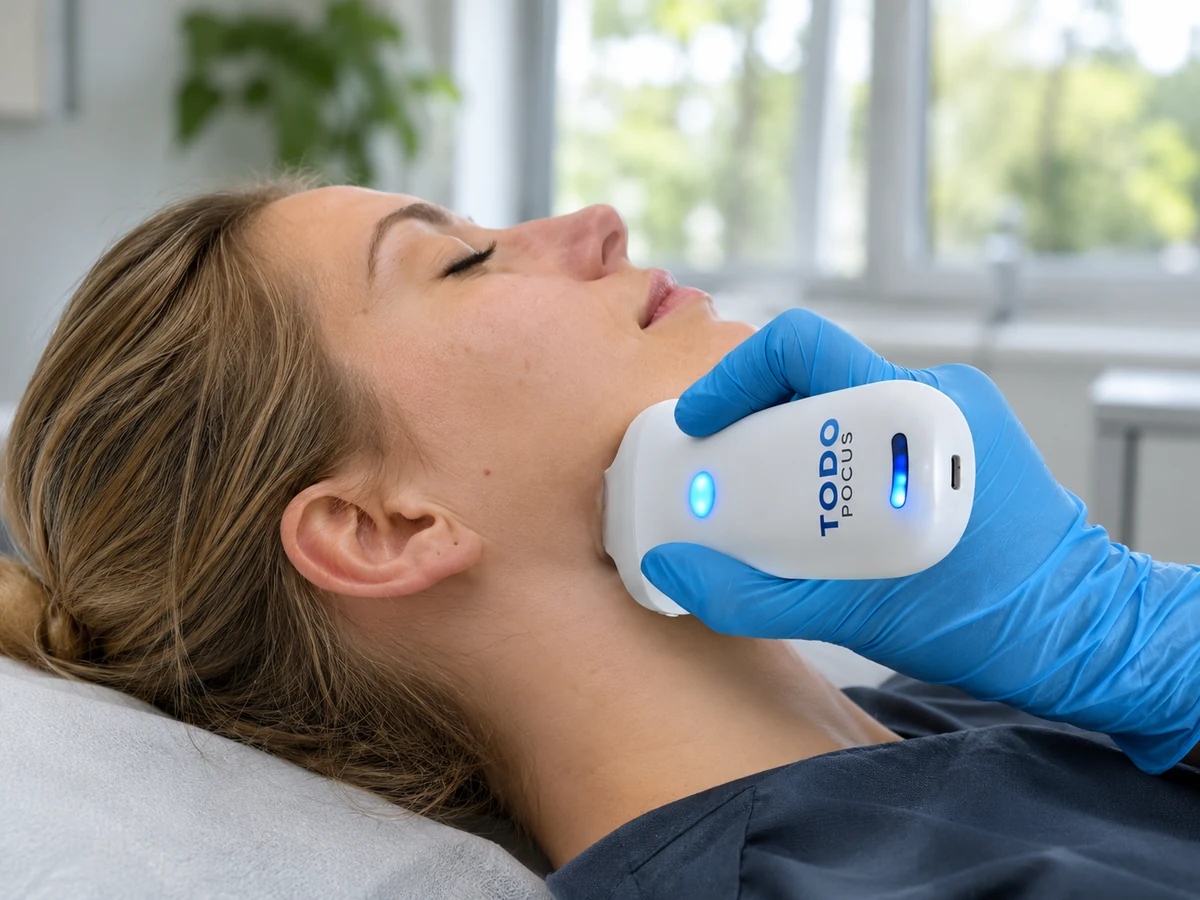
If you do house calls, concierge visits or prehospital work, wireless earns its keep. The probe, phone and gel fit in one small bag, and there’s no cable snagging on a stretcher or bedside rail. Most wireless probes connect directly to your phone, so you don’t need external Wi-Fi. For EMS and outdoor work, check phone screen glare in daylight, cold-weather battery drop, and your local medical direction protocols before buying.
Question 3: Will Your Scans Make It Into the Chart?
A scan that never reaches the record can’t be billed or used to back up a decision later. This is where subscription models and archiving choices show up, often a year or two after you buy.
What Happens When a Plan Lapses
On some platforms, the plan is part of the core function. Let it lapse, and PW Doppler, saved studies or DICOM export can switch off. The probe still turns on, but it does less than the day you bought it.
| Model | What You Pay for Software | What Stops Without It |
|---|---|---|
| TodoPocus | Nothing | — |
| GE Vscan Air | Nothing for core imaging; AI tools optional | — |
| Clarius HD3 | $695/yr, $1,785 for 3 years, or $2,500 one-time; licensed per scanner | PW Doppler, saved studies, DICOM, cloud |
| Butterfly iQ3 | $299/yr Core or $420+/yr Advanced, or buy the $5,399 All-In Bundle | Saved studies and cloud (Core); PW Doppler, Biplane and AI tools need Advanced |
| Mindray TE Air | Nothing; AutoEF and TDI are optional $500 add-ons on the i3P | — |
| Vave | Nothing | — |
| Philips Lumify | Nothing when bought outright; some regions also offer monthly plans | — |
Three details trip people up. On Butterfly, the $299/yr Core plan saves clips to the cloud, but PW Doppler and Biplane require the $420+/yr Advanced tier (and hospital PACS/worklist integration is an enterprise add-on). Butterfly’s All-In Bundle avoids yearly fees, though it’s tied to that specific probe and doesn’t transfer to a replacement. And Clarius licenses each scanner separately, so two Clarius scanners need two plans.
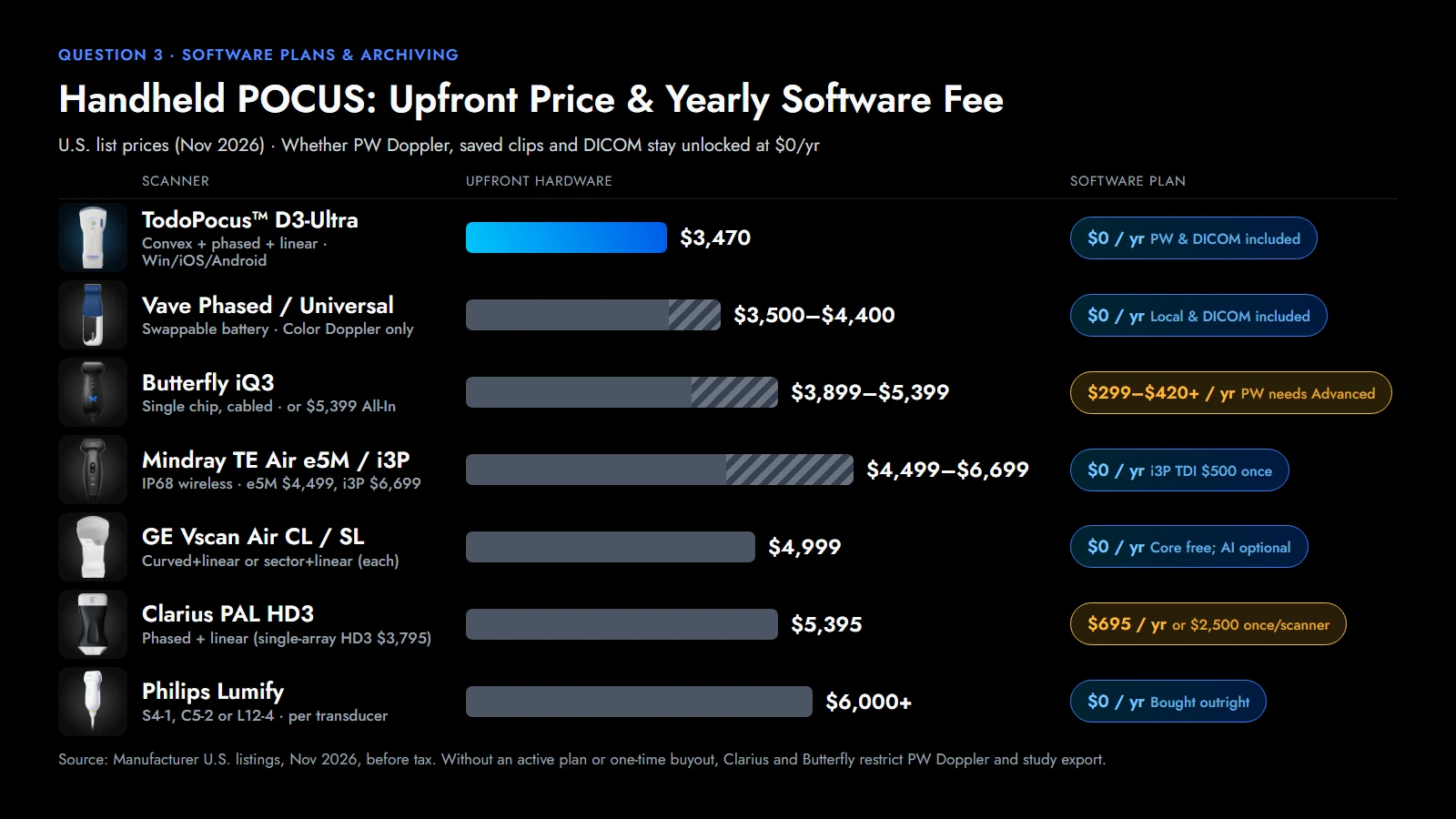
Before you order, ask two direct questions. Which features remain if you never pay? And can you still open and export images you already saved if you cancel? Our breakdown of handheld ultrasound subscription costs goes brand by brand.
When Paying for the Cloud Makes Sense
The plan isn’t always wasted money. If you’re building skills in residency, logging cases for hospital credentialing, or running department QA where a director reviews clips, Butterfly’s and Clarius’s cloud tools are well done. For a solo practice or small clinic, local storage plus DICOM and MP4 export usually covers it. Images go into the EHR like any other attachment.
Documentation Details That Sink Claims
Billing problems usually come from a few missing details rather than complex coding rules. Ultrasound-guided vascular access (CPT 76937) requires a permanently recorded image and a note that vessel patency was evaluated. A scan that answers one question is documented as a limited exam, not a complete one. And a quick look with no saved image can’t be billed on its own.
That makes the save-and-export workflow a buying criterion, not an afterthought. For needle-placement and injection coding specifics (CPT 76942), see our ultrasound guidance documentation guide. Payment rates vary by your local Medicare Administrative Contractor.
Your Clinic Computer and Shared Logins
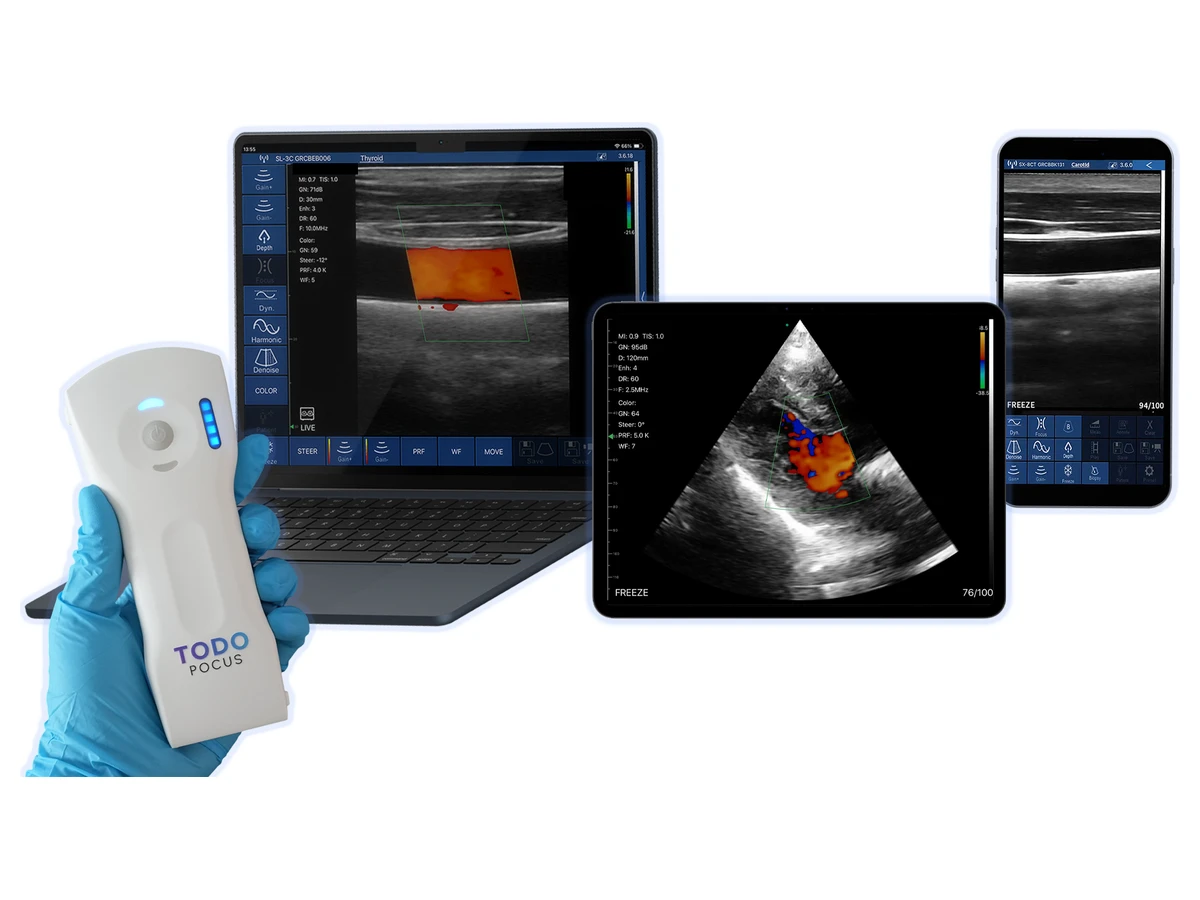
Most exam-room PCs run Windows, while most handhelds in this guide are built around iOS and Android apps. TodoPocus also runs natively on Windows; for any other model, confirm Windows support directly rather than assuming a USB-C cable will talk to a laptop. If two or three clinicians will share one probe, also check that the app supports separate user logins for clean archiving. Our guides to ultrasounds for iPhone and iPad and ultrasounds for Android cover mobile device compatibility in detail.
Question 4: How Many of Your Exams Does One Purchase Cover?
A normal day in a general practice or urgent care clinic might include a gallbladder or kidney, a quick look at the heart, and an IV or joint injection. That’s three array types. Whether they come in one probe or three shapes everything else about the purchase.
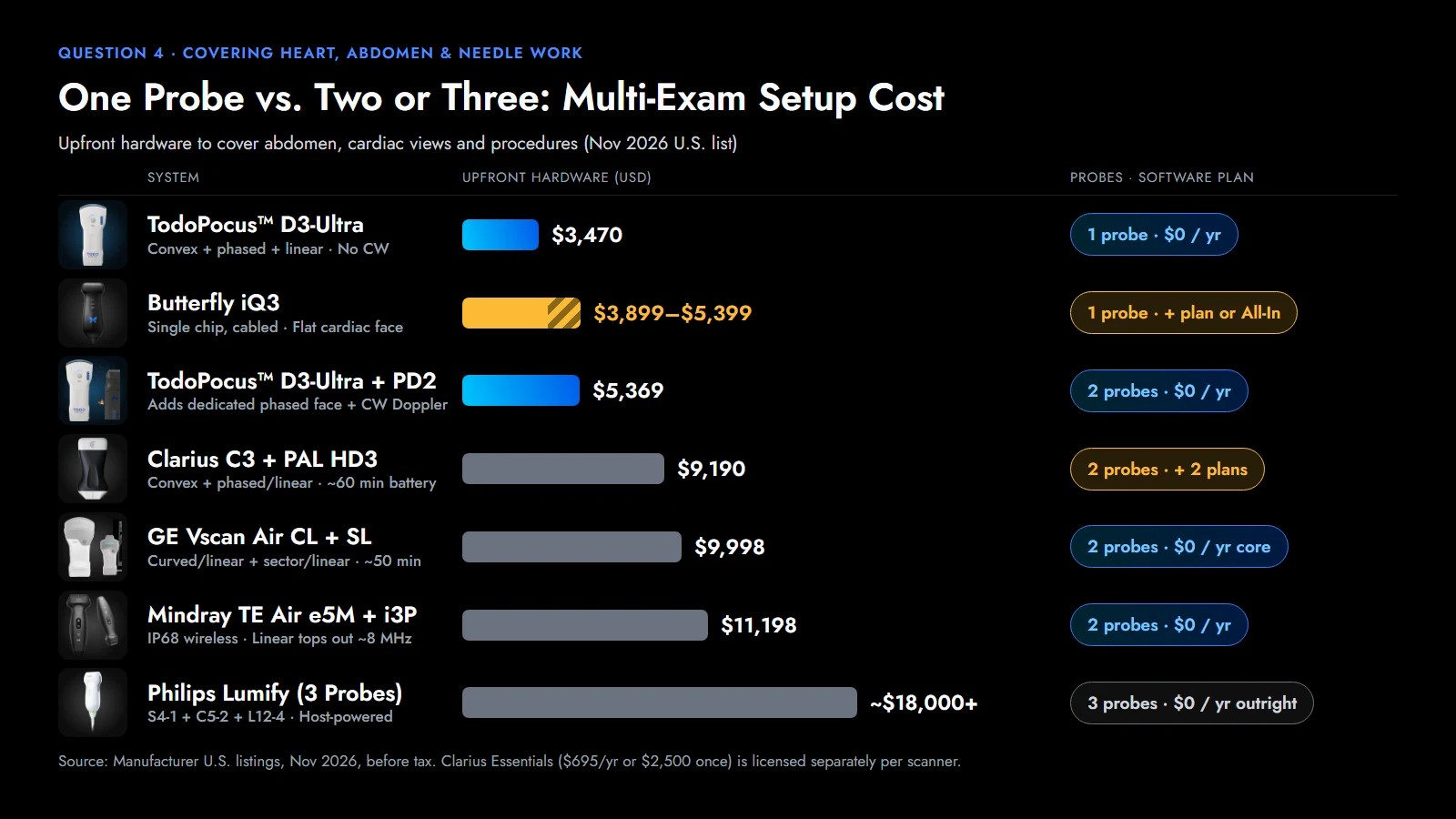
Here’s how the main routes cover heart, abdomen and needle work:
| Route | Probes | What It Covers | What You Give Up | Upfront |
|---|---|---|---|---|
| TodoPocus D3-Ultra | 1 | Abdomen, lungs, LV function with PW, IVC, IVs and injections | No CW; linear tops out at 10 MHz; 263 g | $3,470 |
| Butterfly iQ3 | 1 | Whole-body presets, biplane imaging, strong teaching tools | Cabled; PW needs Advanced plan or All-In; flat face between ribs | $3,899–$5,399 |
| TodoPocus D3-Ultra + PD2 | 2 | Everything D3-Ultra covers, plus a dedicated cardiac footprint with CW | Two probes to charge and clean | $5,369 |
| Clarius C3 HD3 + PAL HD3 | 2 | Convex for abdomen; phased and linear for heart and needle work; AI presets and cloud | Two plans (per scanner); about 60 minutes per charge | $9,190 plus plans |
| GE Vscan Air CL + SL | 2 | Curved array for abdomen, sector for heart, linear on both | No CW; about 50 minutes per charge; two devices | $9,998 |
| Mindray TE Air e5M + i3P | 2 | Convex/linear plus phased; IP68; optional AutoEF and TDI | Linear tops out near 8 MHz | $11,198 |
| Philips Lumify S4-1 + C5-2 + L12-4 | 3 | Three dedicated arrays | Cabled; drains the host device; priced per probe | ~$18,000+ |
A single probe is simpler to own, but it has a ceiling. Multi-array probes are usually heavier, and if one fails, everything stops. Separate probes buy arrays tuned for each job, plus more charging and cleaning. If you work in one specialty, a single-array probe tuned for it often fits better. If your days cover several body regions, one probe that handles most exams saves both money and handling.
Doppler: Pay for What You’ll Actually Use
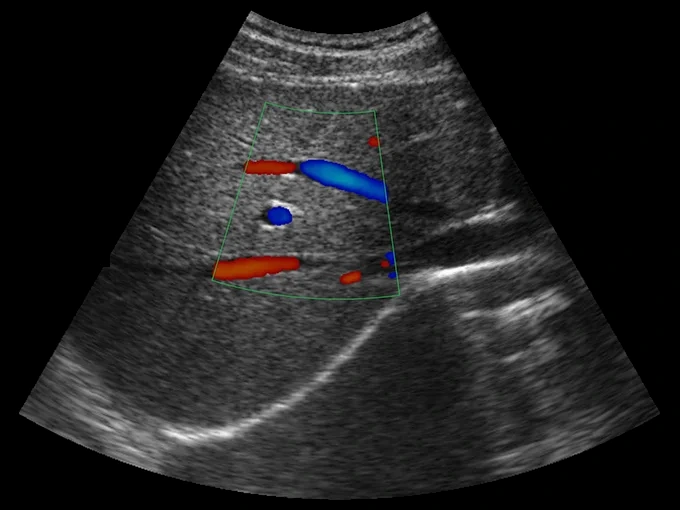
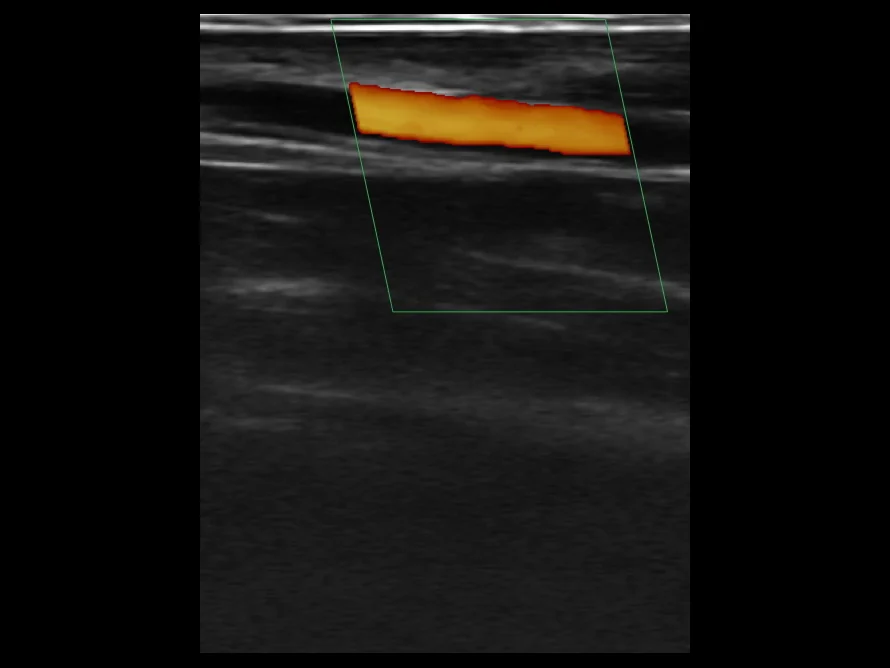
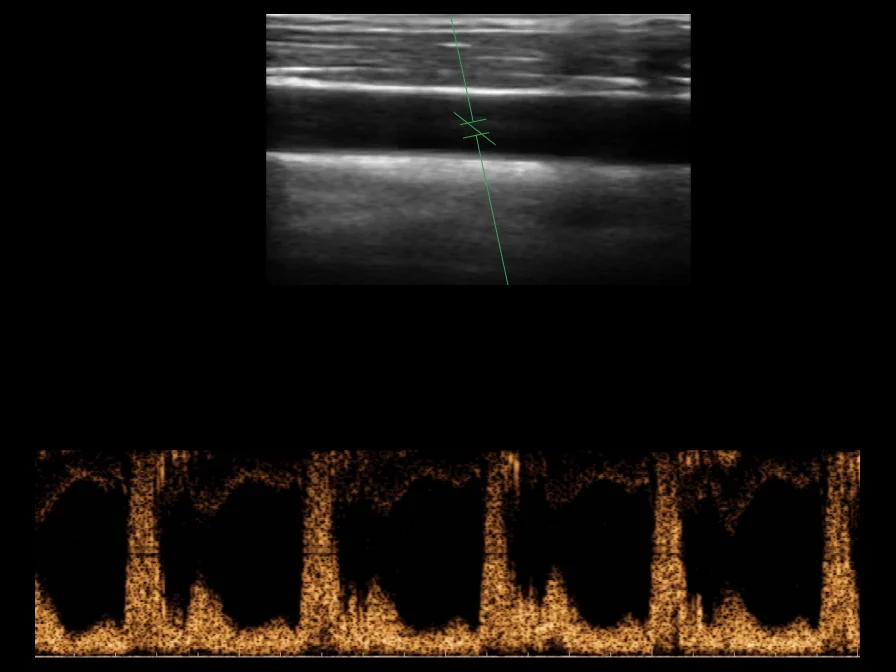
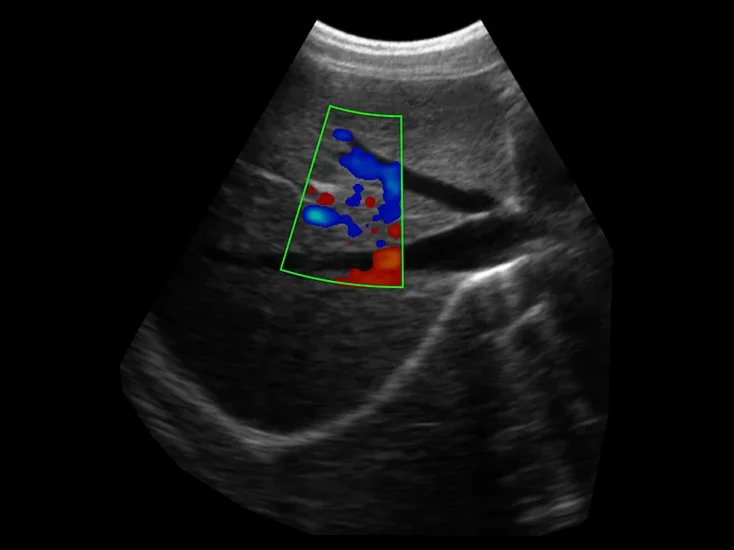
Color and PW are standard on most handhelds now, though Butterfly and Clarius put PW behind their plans, and Vave stops at Color. CW and tissue Doppler are where the choice narrows.
- CW only, for valve gradients: the TodoPocus™ PD2 is a wireless phased array with CW for $1,899. EchoNous Kosmos also has CW, inside a much larger budget.
- Tissue Doppler: EchoNous Kosmos, or the Mindray TE Air i3P with its $500 TDI add-on.
- ECG-gated echo: still a console, such as the Mindray MX7.
If CW is all you’re missing, you don’t need to buy into a tissue Doppler system.
Footprint Matters More Than Presets
A “Pediatric,” “Cardiac” or “MSK” preset changes software settings. It doesn’t narrow the probe face or raise the frequency. A general linear that tops out at 10 MHz handles IVs and most joints. Small nerves, tendons and facial vessels look better at 14–20 MHz and above. Pediatrics shows the footprint problem most clearly, and our pediatric handheld ultrasound guide measures probe faces side by side.
Point-of-Care Ultrasound Devices Worth Shortlisting
These are the handhelds most clinicians end up comparing in 2026, grouped by the work they’re built for rather than ranked head to head. Each entry covers what the device is like in daily use, how it answers the four questions, and who should look elsewhere. Prices are U.S. list prices or typical dealer quotes, before tax.
| Model | Arrays | Doppler | Power & Connection | Platforms | Upfront & Software Plan |
|---|---|---|---|---|---|
| TodoPocus™ D3-Ultra | Convex + phased + linear | Color, PDI, PW | Wireless; ~2 h battery | iOS, Android, Windows | $3,470 · No plan |
| GE Vscan Air CL / SL | CL: curved + linear; SL: sector + linear | Color, PW | Wireless; ~50 min battery | iOS, Android | $4,999 each · No plan for core (AI optional) |
| Butterfly iQ3 | Single chip, whole-body presets | Color; PW with Advanced | Cabled; ~2 h probe battery | iOS, Android | $3,899 + $299–$420+/yr, or $5,399 All-In |
| Clarius PAL HD3 (and HD3 lineup) | Phased + linear (single-array models: one each) | Color; PW with plan | Wireless; ~60 min battery | iOS, Android | $5,395 (single $3,795) + $695/yr or $2,500 once/scanner |
| Mindray TE Air e5M / i3P | e5M: convex/linear; i3P: phased | Color, Power, PW; TDI on i3P | Wireless; ~2 h battery | iOS, Android | $4,499 / $6,699 · No plan (AutoEF, TDI $500 on i3P) |
| Vave Phased / Universal | Phased 1–5 MHz / Universal 2–8 MHz | Color only | Wireless; swappable battery | iOS, Android | $3,500 / $4,400 · No plan |
| Philips Lumify | S4-1, C5-2 or L12-4, sold separately | Color, PW | Cabled; powered by host | Android; iOS w/ module | ~$6,000+ per probe · No plan outright |
| TodoPocus™ PD2 | Phased | Color, Power, PW, CW | Wi-Fi or USB; ~1.5–2 h battery | iOS, Android, Windows | $1,899 · No plan |
| EchoNous Kosmos | Torso NXT / Torso-One phased + Lexsa linear | Color, PW, CW, TDI | Cabled; powered by tablet | Tablets or Bridge | $7,700 to under $21,000 · Varies by bundle |
| TodoPocus™ L10H-Guide | Linear 7.5/10 MHz + magnetic needle navigation | Color, Power, PW | Wi-Fi only; ~5 h battery (USB charge) | iOS, Android, Windows | $2,870 · No plan |
| TodoPocus™ D2T | Convex + 149° transvaginal | Color, PW | Wireless; ~3 h battery | iOS, Android, Windows | $2,770 · No plan |
Multipurpose and Whole-Body Handhelds
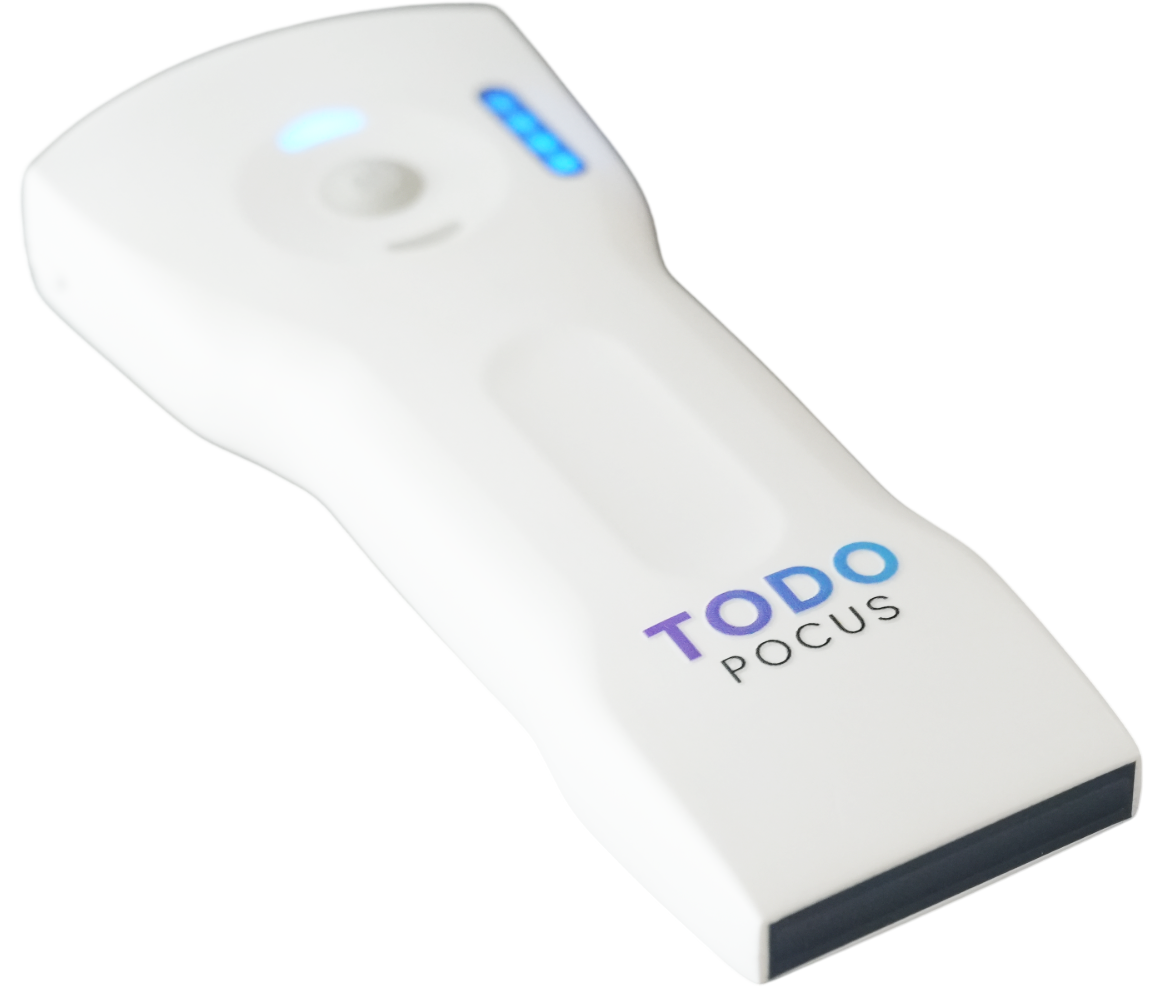
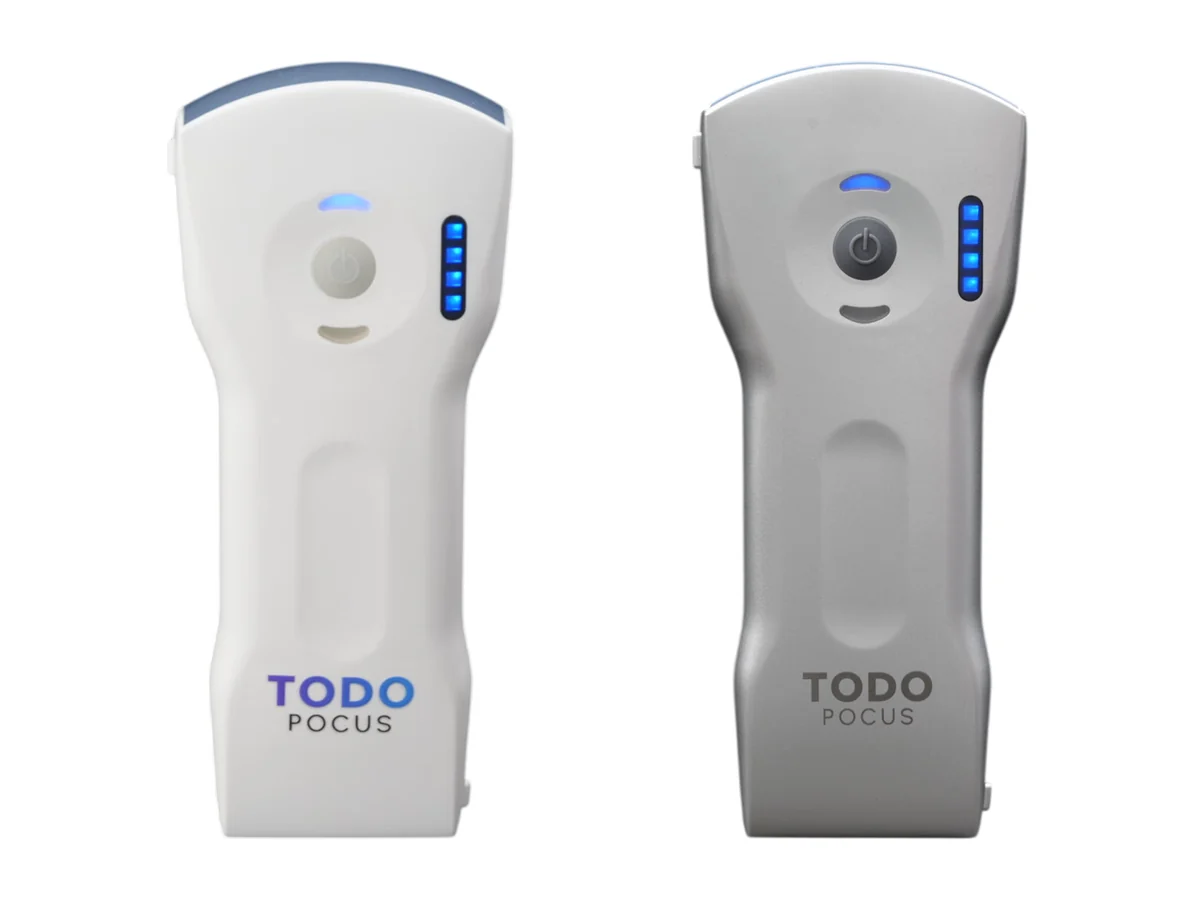
TodoPocus™ D3-Ultra — $3,470
Key specs: Convex, phased and linear arrays · 192 elements, 64 channels · imaging to about 30 cm · PW with EF and stroke volume · IP67 · about 2 hours per charge · iOS, Android and Windows · 3-year warranty, 30-day trial
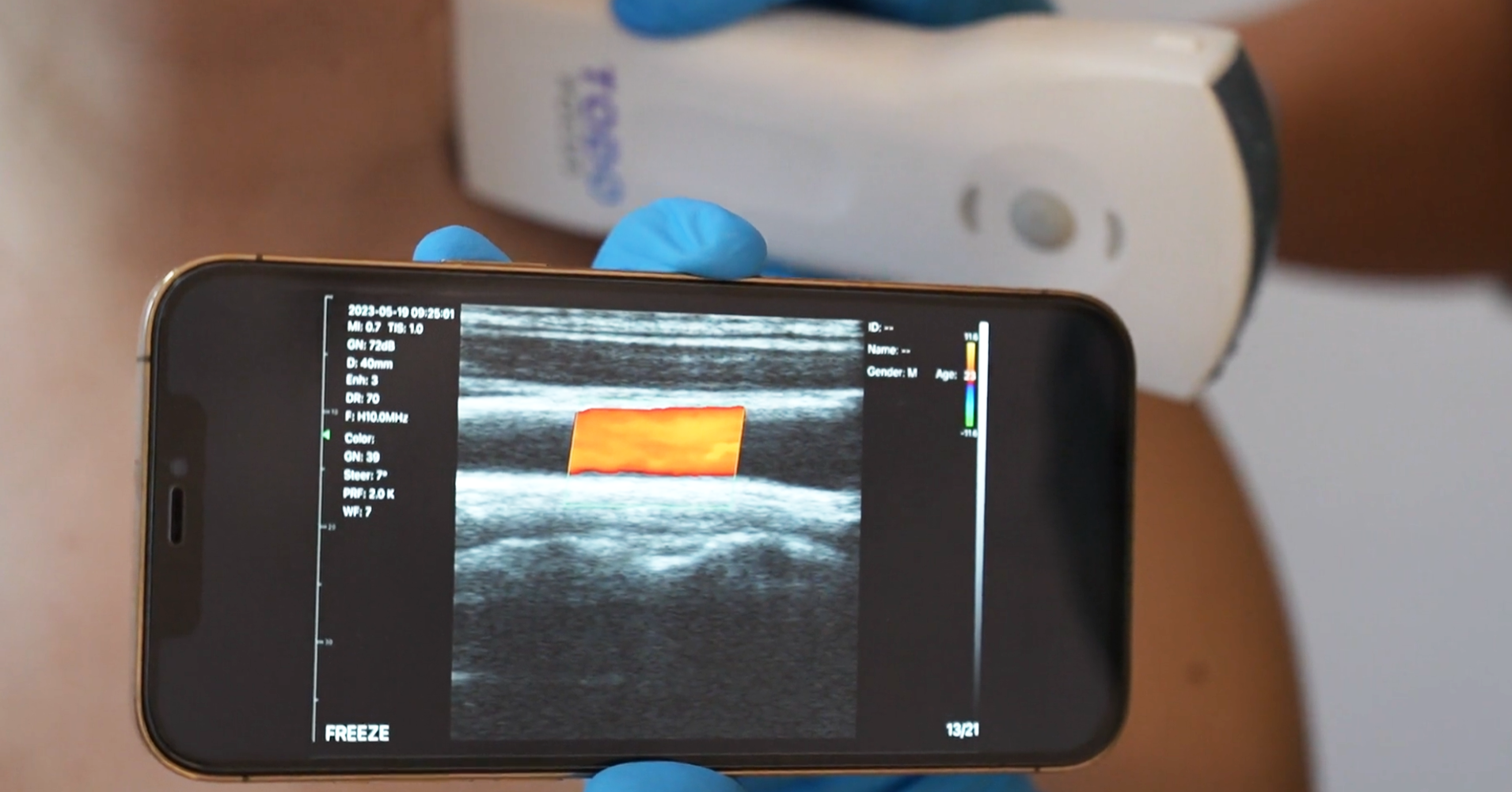
D3-Ultra is built for clinicians who’d otherwise carry three probes. In a typical visit, you check the gallbladder and kidneys on convex, switch to phased for LV function or an effusion, then go linear for an IV or knee injection. Same device, same app. PW Doppler, EF calculations and local DICOM/MP4 export carry no yearly fee. It runs natively on Windows, so images can go straight to the exam-room PC. A Space Silver edition with a thermal-optimized housing costs $3,570.
- Choose it if: You want one device to cover general practice, urgent care or house calls without a plan.
- Look elsewhere if: You grade valves with CW (pair it with the PD2 below), or need 14–20 MHz detail for small tendons or facial vessels. At 263 g, it’s heavier than single-head probes.
GE HealthCare Vscan Air CL / SL — $4,999 Each
Key specs: CL: curved + linear · SL: sector + linear · SignalMax crystal imaging · IP67 · about 50 minutes per charge · 3-year warranty · iOS and Android
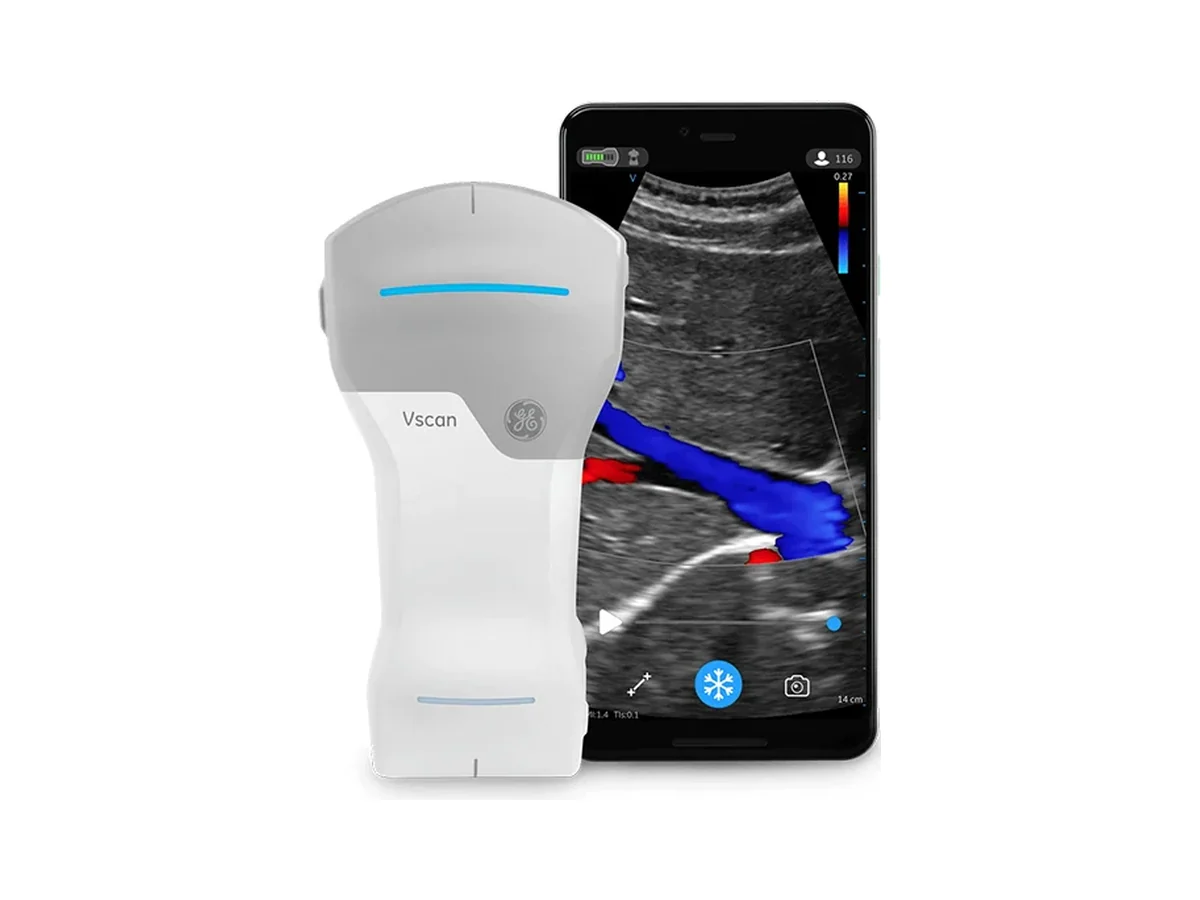
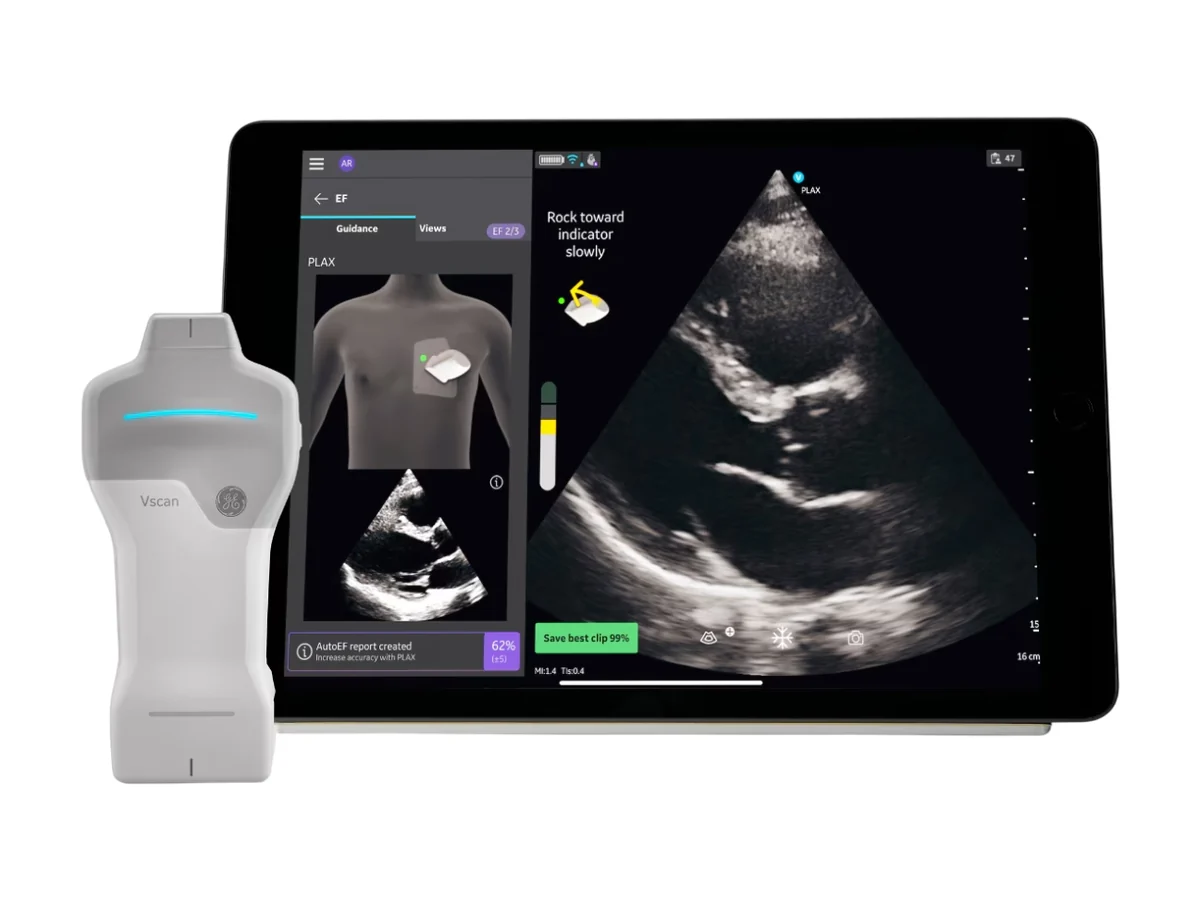
GE’s two dual-head probes are the safe-name choice. The CL pairs a curved array with a linear one for abdominal and procedural work. The SL swaps the curved array for a sector array for heart and lungs. Grayscale is clean, particularly at depth. Color and PW need no subscription; GE charges only for optional AI and cloud tools. The GE name also helps when you share images with a hospital that runs GE.
- Choose it if: Brand matters to your practice, and your work leans clearly abdominal (CL) or cardiac (SL).
- Look elsewhere if: You need heart and abdomen in one device; covering both means buying both. The 50-minute battery is short for a full clinic day, and there’s no Windows app.
Butterfly iQ3 — $3,899 Plus Plan, or $5,399 All-In
Key specs: Single semiconductor chip with whole-body presets up to 12 MHz · Biplane and iQ Fan tools · about 2 hours on internal battery (contact dock charging) · 300 g · IP67 · cabled to phone or tablet
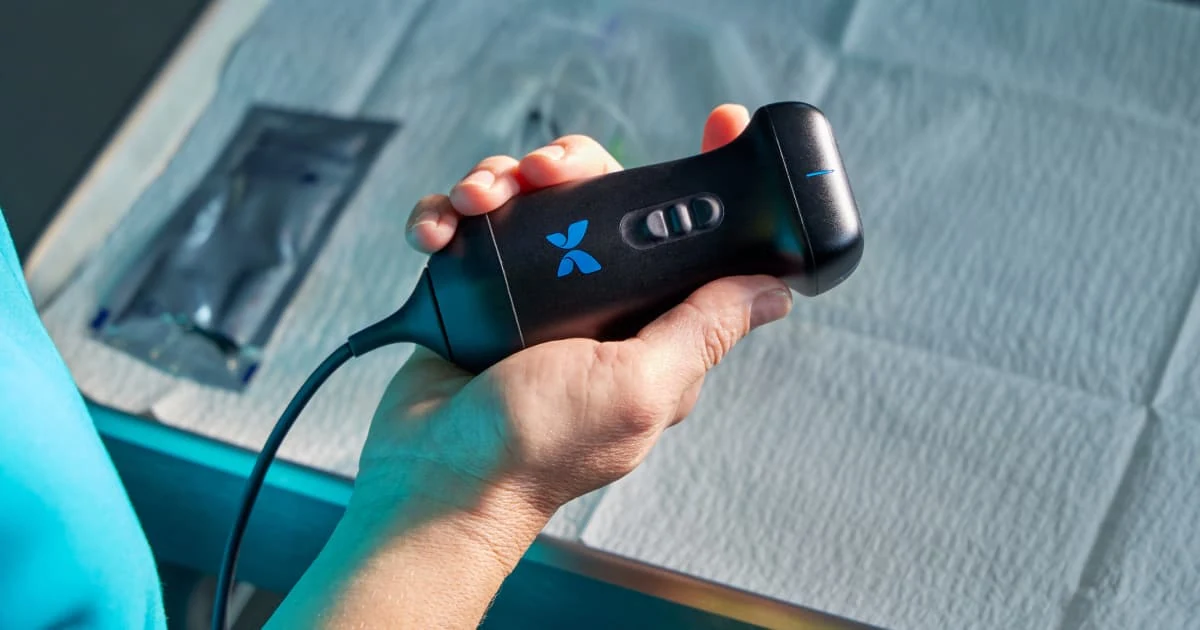
One chip emulates linear, curved and phased presets, so a single probe covers the whole body. Where it stands out is teaching. The guidance tools and educational content help new users build skills quickly. Without a plan, it drops to basic live imaging, and PW Doppler requires the Advanced tier ($420+/yr) or the All-In Bundle. If you’ll keep it for years, All-In is usually the better deal.
- Choose it if: You’re learning POCUS and want structured guidance, or your group already runs Butterfly’s cloud.
- Look elsewhere if: You want a cordless probe or a dedicated cardiac footprint (see our Butterfly iQ3 review and Butterfly iQ3 alternatives).
Clarius PAL HD3 and the HD3 Lineup — $5,395 (Single-Array $3,795)
Key specs: PAL HD3: phased + linear in one wireless body · single-array models include C3, L7, L15 and PA · L20 and EC7 HD3 $5,395 · IP67 · about 60 minutes per charge · iOS and Android
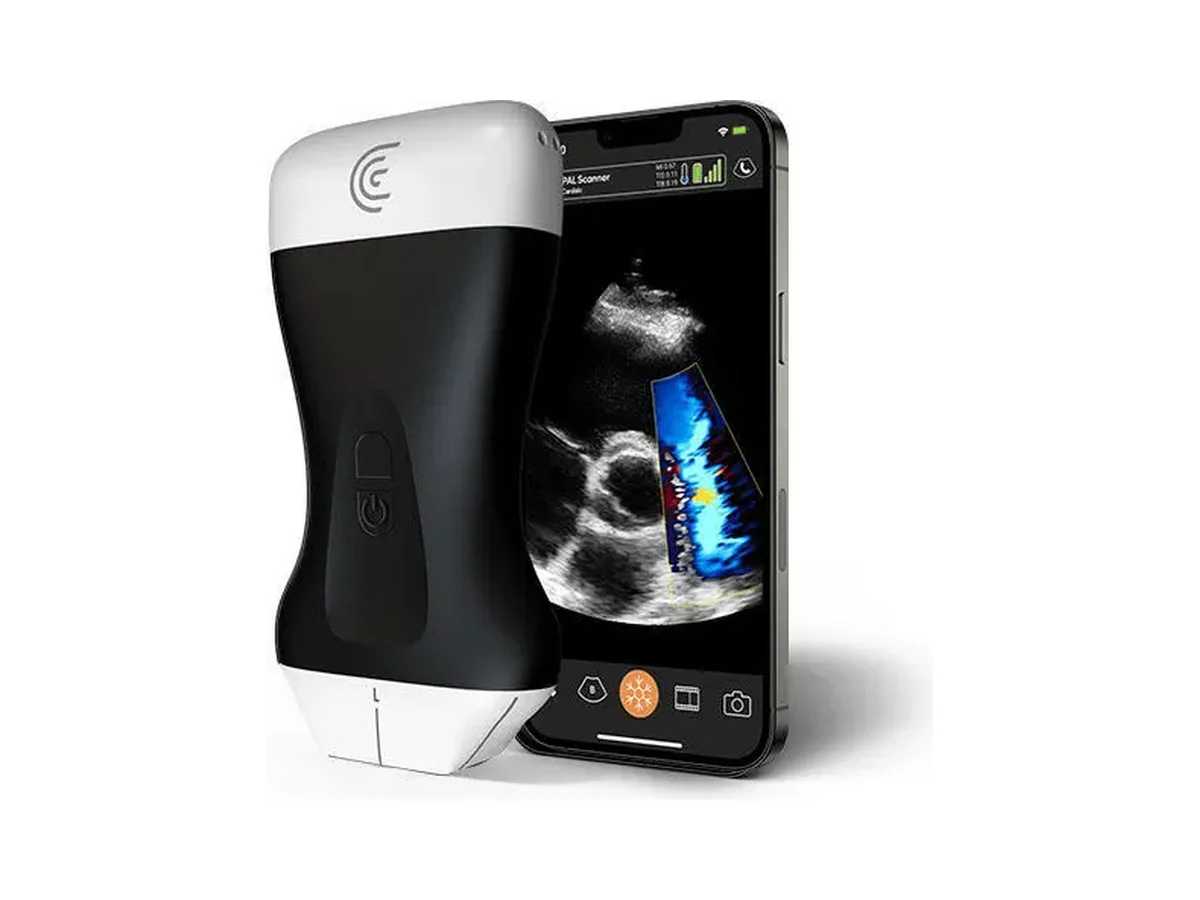
Clarius is best known for single-purpose scanners, each tuned closely to one specialty. For general and urgent care, the model most people compare is the PAL HD3, which covers heart, lungs and needle work in one scanner. The app is polished, with AI presets and cloud collaboration that many physicians like. Essentials unlocks PW Doppler, saved studies, DICOM and cloud tools, and it’s licensed per scanner.
- Choose it if: You practice in one specialty and value a refined app with AI presets and cloud review.
- Look elsewhere if: You cross specialties. Abdomen needs a separate C3 scanner, and each scanner needs its own plan (see our no-subscription Clarius alternatives).
Mindray TE Air e5M / i3P — $4,499 / $6,699
Key specs: e5M: convex and linear presets on one head · 229 g · IP68 · Color, Power and PW · DICOM/PACS export · about 2 hours · 3-year warranty · iOS and Android
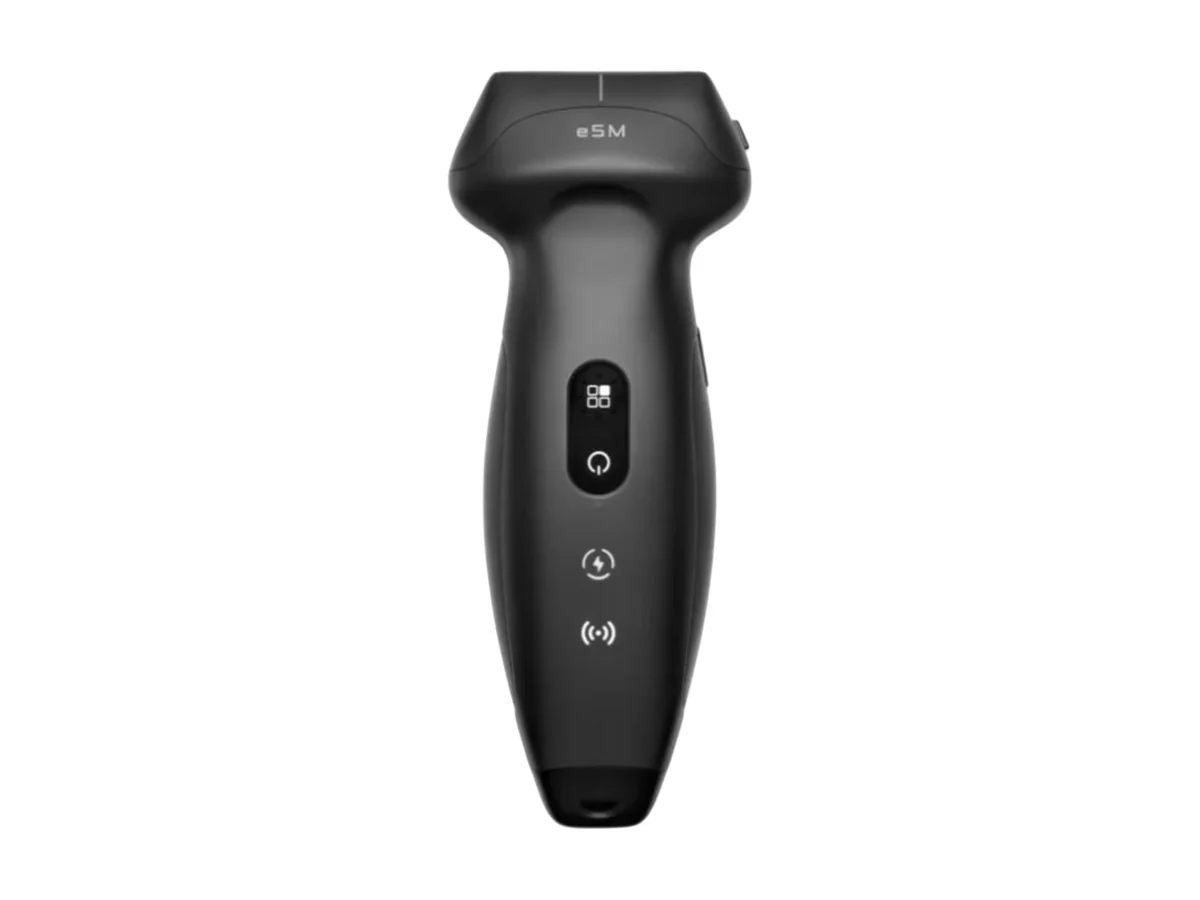
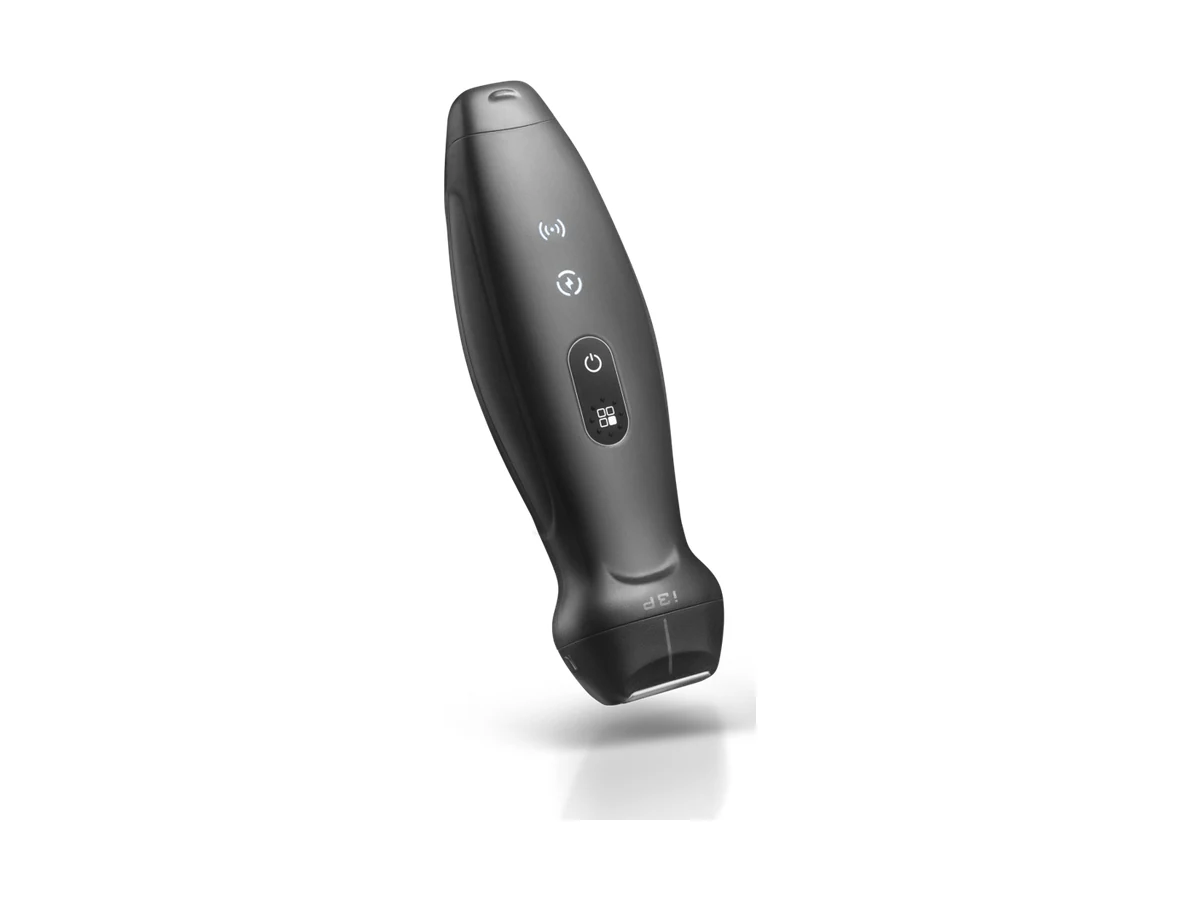
Mindray brings its console imaging to two handhelds. The e5M’s IP68 rating handles thorough wipe-downs between patients, and PACS export comes without a yearly fee. That suits fast-turnover urgent care: FAST, right upper quadrant, kidneys, soft tissue and IVs. The i3P is the separate phased model for dedicated cardiac work, with AutoEF and TDI as $500 add-ons; see our Mindray TE Air review for full specs.
- Choose it if: You run a busy urgent care clinic, or already use Mindray consoles and PACS.
- Look elsewhere if: You need fine nerve or tendon detail, since e5M linear mode stops near 8 MHz. The e5M has no phased array for intercostal cardiac views, so dedicated heart work needs the i3P as well.
Vave Phased / Universal — $3,500 / $4,400
Key specs: Phased 1–5 MHz or Universal 2–8 MHz · Color Doppler only · removable battery packs · no subscription · local storage and DICOM export · about 340 g with battery · iOS and Android
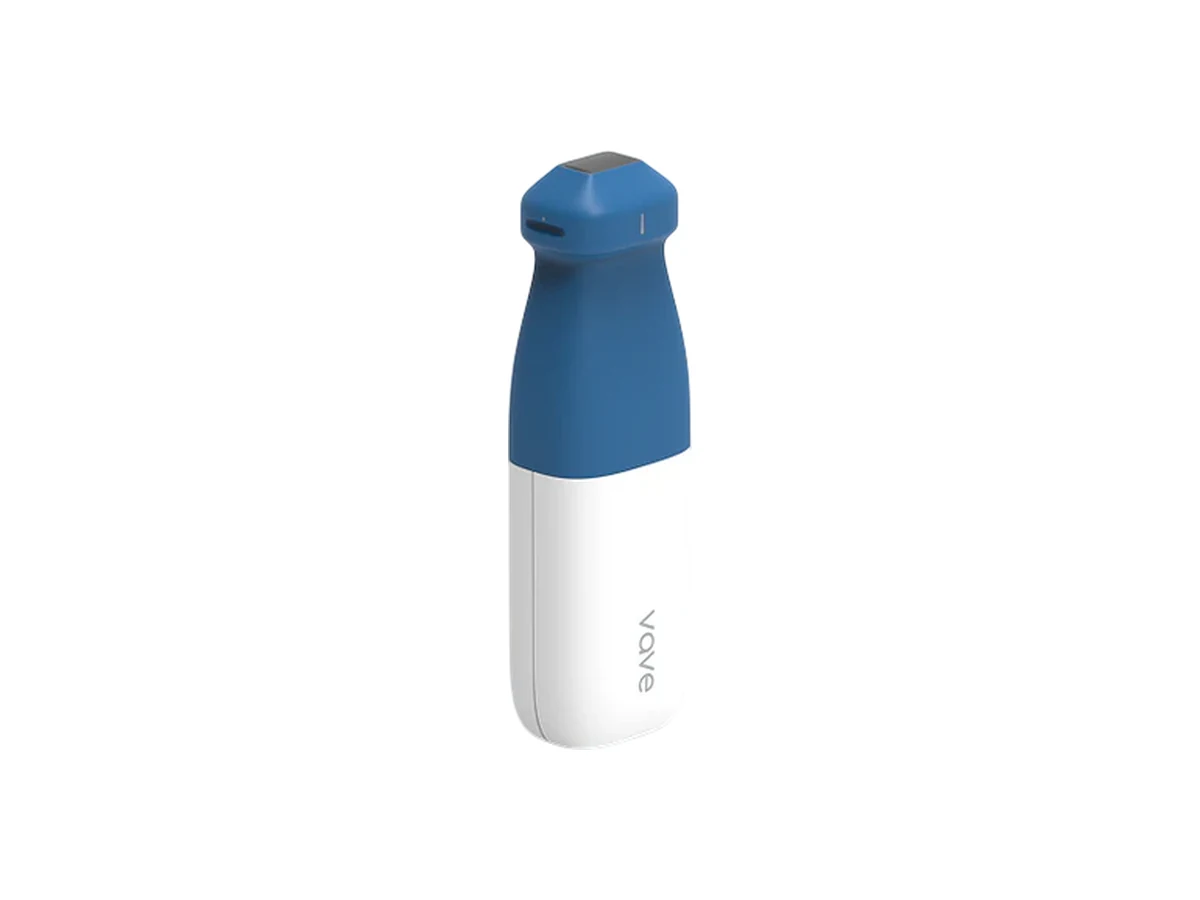
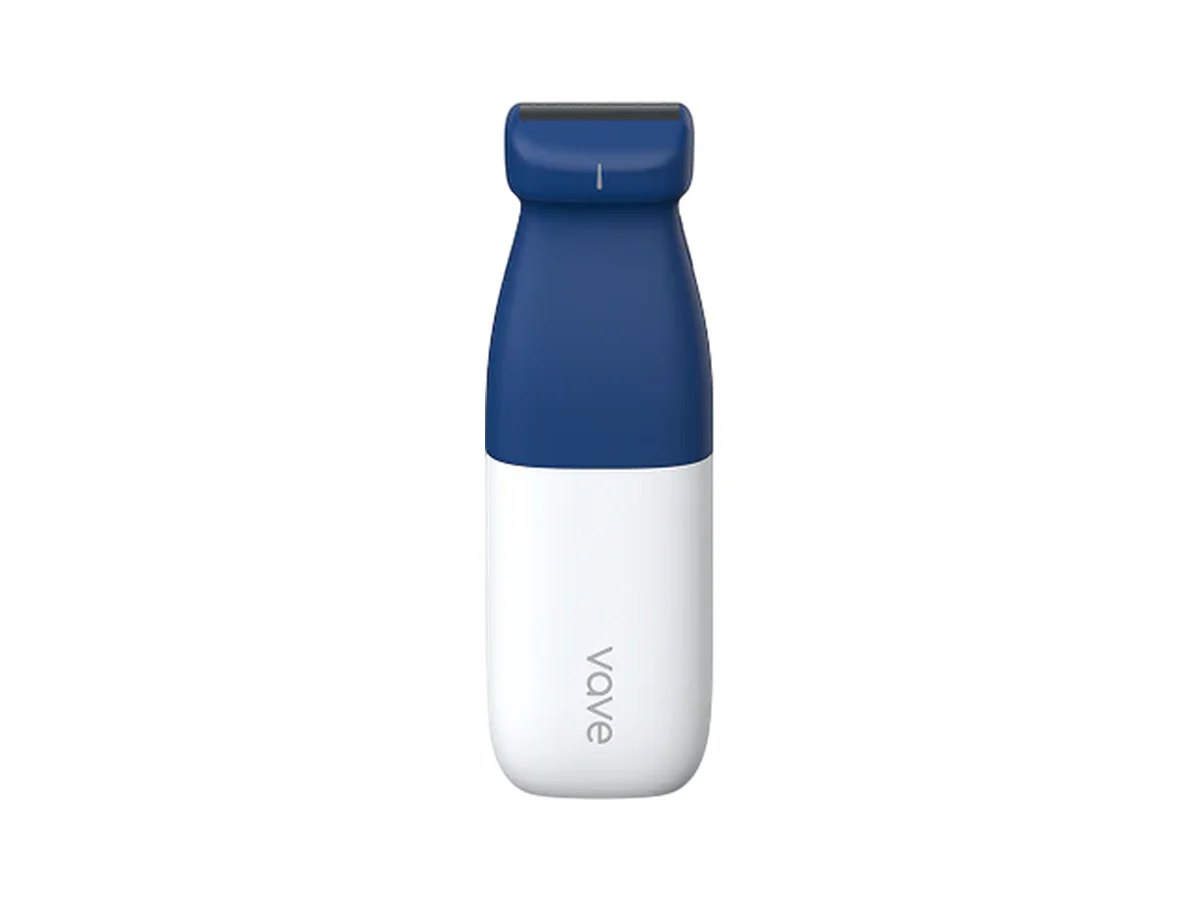
Vave’s battery comes out. On a packed clinic day, you swap in a fresh pack instead of waiting for a charge. The Universal covers superficial and deep presets in one probe; the Phased is tuned for cardiac, lung and abdominal windows.
- Choose it if: Uninterrupted scanning across long days matters more than weight or PW Doppler.
- Look elsewhere if: You need PW Doppler, a high-frequency linear for fine vascular or MSK work, or a lighter probe.
Philips Lumify — About $6,000+ per Transducer
Key specs: S4-1 phased, C5-2 curved and L12-4 linear, sold separately · no probe battery; powered by phone or tablet · Color and PW · Reacts tele-guidance · Android via USB-C; iOS needs a power module

Lumify flips the usual design. The probe has no battery, so there’s no mid-scan shutdown while the host device has charge. Philips image processing is strong, and Reacts lets a colleague watch your screen and guide you live. Bought outright, there’s no subscription.
- Choose it if: You mainly need one array type and want Philips imaging with live remote guidance.
- Look elsewhere if: You need several arrays on a personal budget, since each is priced separately (see our Philips Lumify alternatives). There’s no CW or tissue Doppler.
Cardiac, Procedural and Specialty Handhelds
TodoPocus™ PD2 — $1,899
Key specs: 192-element phased array · selectable 2.2, 2.8 and 3.6 MHz · CW, PW, Color and Power Doppler · EF and stroke volume calculations · 120 g · Wi-Fi or USB connection · iOS, Android and Windows

PD2 is one of the few wireless handhelds with CW Doppler. Its small phased footprint suits tight intercostal windows, and it adds valve screening without moving to a tablet system. Many clinicians pair it with a multipurpose probe rather than using it alone.
- Choose it if: You want CW valve screening on a personal budget, or you’re adding a cardiac probe to a D3-Ultra.
- Look elsewhere if: You need tissue Doppler or AI EF. It’s phased only, so needle work needs a separate linear probe.
EchoNous Kosmos — $7,700 to Under $21,000
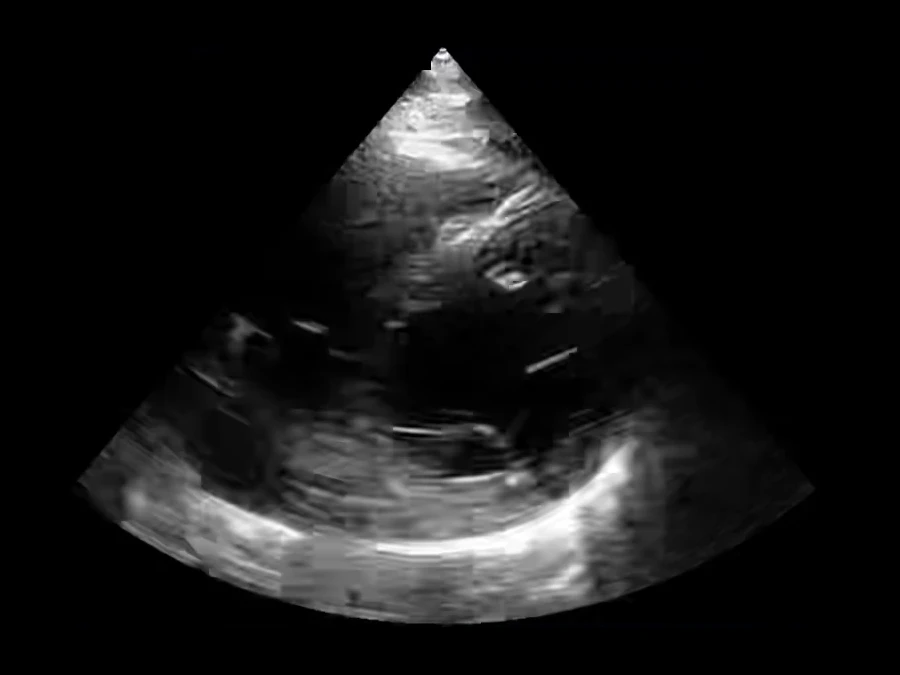
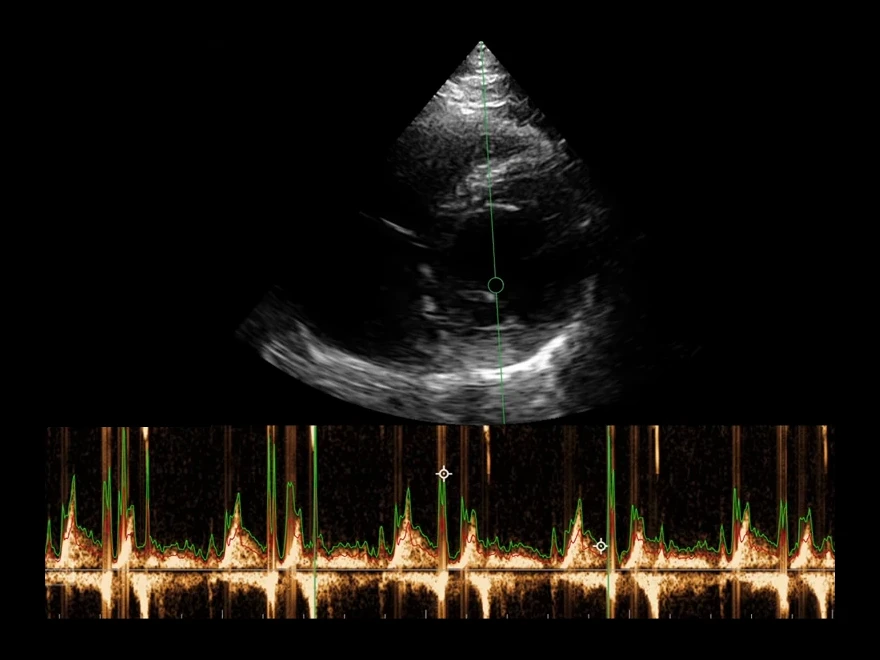
Key specs: Torso NXT or Torso-One phased + Lexsa linear · CW, PW and tissue Doppler · AI-guided acquisition and EF · tablets or Kosmos Bridge · 5-year transducer warranty in the U.S.
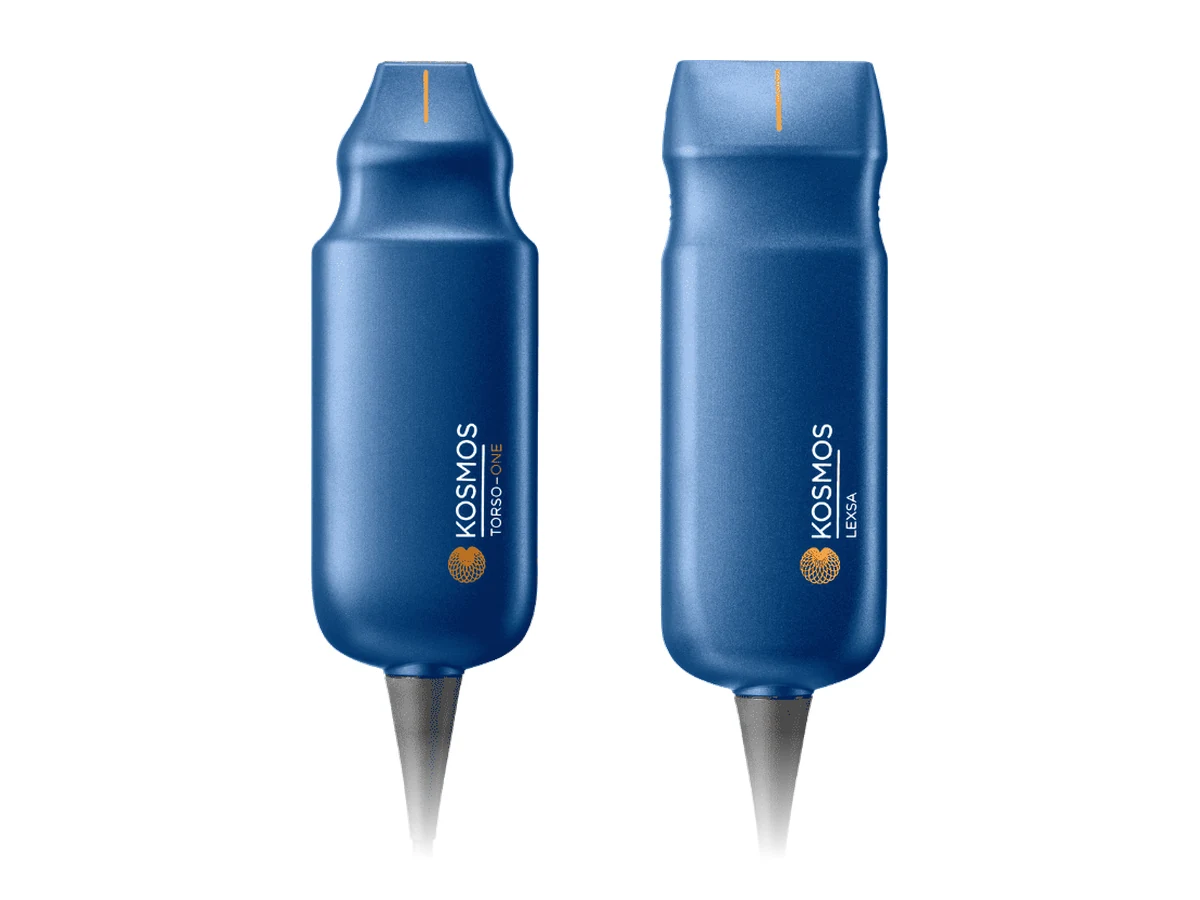
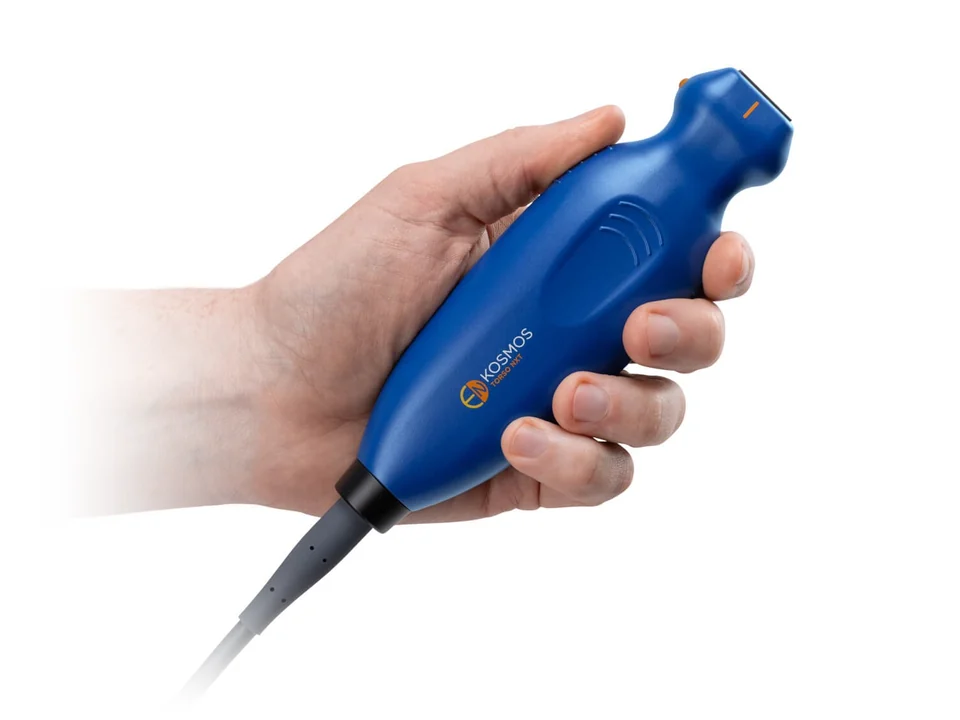
Kosmos brings CW and tissue Doppler outside a console, plus AI tools that help you find standard views. The newer Torso NXT keeps the 20.7 × 16 mm cardiac footprint in a smaller housing with a user-replaceable cable. For a cardiology office, that means quantitative bedside echo without a cart. Kosmos Mobile starts around $7,700; full Kosmos Plus configurations come in under $21,000 (more in our EchoNous Kosmos review).
- Choose it if: You need tissue Doppler, AI EF or guided acquisition.
- Look elsewhere if: CW is all you’re missing; a dedicated CW handheld costs a fraction of this. It doesn’t run on phones and doesn’t do TEE.
Also on this path: Mindray TE Air i3P. With the $500 TDI add-on, it’s a wireless tissue Doppler option that works with phones, which Kosmos doesn’t. It covers cardiac only, so needle work still needs a second probe.
TodoPocus™ L10H-Guide — $2,870
Key specs: 7.5/10 MHz linear · 192 elements · 2–10 cm depth · Color, Power and PW · built-in magnetic needle navigation · about 5 hours per charge (USB cable charging) · 200 g · Wi-Fi only while scanning · iOS, Android and Windows
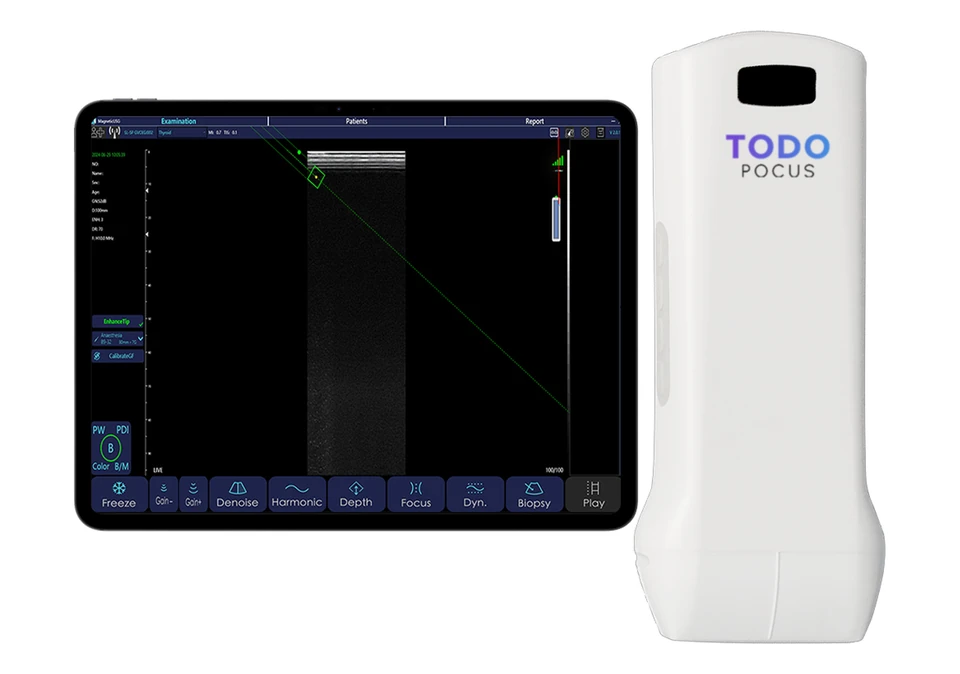
L10H-Guide is for clinicians whose scanning is mostly needles: nerve blocks, joint injections and difficult IVs. The built-in magnetic navigation shows the projected needle path in real time, freehand, for in-plane and out-of-plane approaches. There’s no physical needle guide bracket to buy or attach. At 200 g with about 5 hours per charge, it handles a full procedure day, and there’s no yearly fee.
- Choose it if: Procedures are the core of your scanning, or you’re adding a needle probe to a multipurpose device.
- Look elsewhere if: You need deep exams, fine MSK detail above 10 MHz, or a USB data connection while scanning.
TodoPocus™ D2T — $2,770
Key specs: 192-element convex array (to about 30 cm) + 149° transvaginal array (to about 12 cm) in one wireless unit · OB package with GS, CRL, BPD, HC, AC, FL and estimated fetal weight · about 3 hours per charge · iOS, Android and Windows · no yearly fee

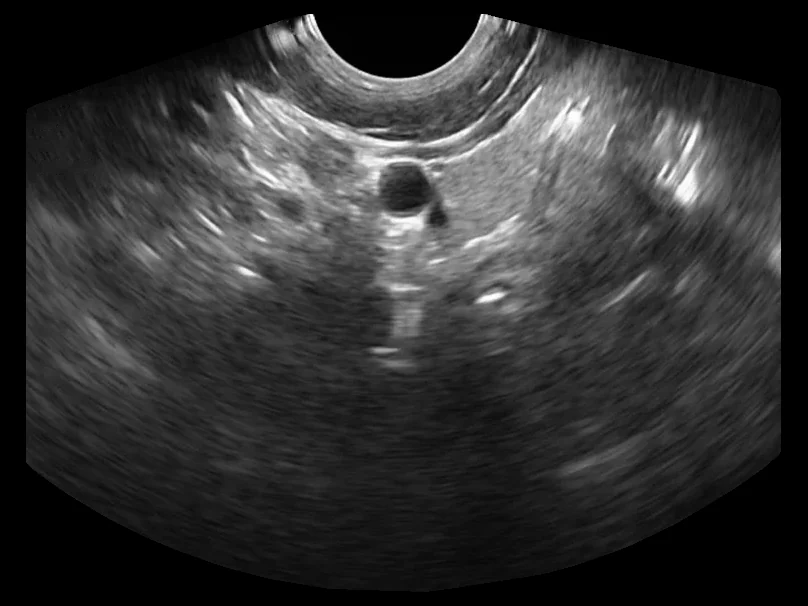
Most OB/GYN offices need two probes: a convex for transabdominal work and an endocavity probe for early pregnancy and gynecology. D2T puts both in one cordless unit. For comparison, a Clarius EC7 HD3 costs $5,395 on its own, and transabdominal work still needs a separate C3 scanner and a second plan.
- Choose it if: You run an OB/GYN office, fertility clinic or midwifery practice.
- Look elsewhere if: You don’t do transvaginal work, or you run high-volume fetal anatomy surveys that call for a console.
How Priorities Shift by Specialty
The four questions apply everywhere, but each practice weighs them differently. Here’s where each one usually lands, and where to go deeper.
| Practice | What Matters Most | Common Options to Compare | Read Next |
|---|---|---|---|
| Family medicine and small clinics | Coverage from one device; no stacked plans | Vscan Air CL; Mindray TE Air e5M (no phased array); TodoPocus D3-Ultra | Small clinic ultrasound guide |
| Urgent care and ED shifts | Fast start-up, easy wipe-down, abdomen plus quick cardiac | Mindray TE Air e5M + i3P; Vscan Air CL + SL; Vave Universal (swappable battery); D3-Ultra | Handheld ultrasound guide |
| Hospitalists buying their own probe | Pocket size; heart, lungs and IVs | Vscan Air SL; Clarius PAL HD3; TodoPocus CD2 (or D3-Ultra with abdomen) | Portable ultrasound machines compared |
| Pain, anesthesia and vascular access | Near-field detail and needle tip | Clarius L15 HD3; Philips Lumify L12-4; TodoPocus L10H-Guide (magnetic navigation) or L14Pro | Vascular access ultrasound guide |
| Cardiology office and FoCUS | Intercostal footprint; CW and TDI | EchoNous Kosmos; TE Air i3P with TDI; TodoPocus PD2 (CW only); Mindray MX7 console | Bedside echo machines |
| OB/GYN and women’s health | Transabdominal plus transvaginal | Clarius EC7 HD3 + C3 HD3; TodoPocus D2T (both arrays in one probe) | D2T vs. Clarius EC7 HD3 |
| Pediatrics and aesthetics | Narrow physical face; 18–24 MHz for dermis | Pediatric micro-convex / narrow linear; Clarius L20 HD3; TodoPocus L20Pro | Pediatric handheld guide · Linear probes |
A few notes the table can’t hold. In procedure-heavy practices, decide early between software needle enhancement, magnetic tracking and plain in-plane technique, because that narrows the field fast. In OB/GYN, pediatrics and aesthetics, generic probes disappoint most often, so check the hardware itself rather than the preset list.
If You Get a Demo or a Trial Period, Use It Well
If a rep visits, or you’re inside a trial window, the same 30 minutes can answer all four questions. Default demos use a slim model and a stock preset, so set the agenda yourself.
- Scan your hardest patients. In a demo, a colleague with a higher BMI works well. During a trial, use your real difficult cases in the first week. Record cine loops so you can compare later.
- Push the depth and the windows. Go to 18–22 cm on the abdomen, then try an apical view between the ribs. Watch whether the image holds up and whether the face fits.
- Run Doppler longer than feels necessary. Ten to fifteen minutes of color shows you whether the probe dims, slows down or gets hot.
- Time the start-up. Time how long it takes to go from picking up the probe to a live image. On wireless probes, switch phones and time the re-pair.
- Send a real study to your own system. Push a DICOM study to your EHR or PACS, not just the demo tablet. This is where many workflows quietly break.
- Get the plan answers in writing. Ask which features stay if you never pay, whether the license is per scanner, and whether saved images remain exportable after you cancel.
- Ask about repairs. Ask about warranty length, whether repairs ship overseas, turnaround time and loaner units. A month without your only probe is a month without POCUS.
If you do procedures, add one more step: place a needle in a phantom and judge the tip visibility yourself.
The Bottom Line
The right point-of-care ultrasound device isn’t the one with the longest feature list. It’s the one that gives you a usable image on your hardest patients, is ready when you reach for it, gets scans into the chart, and covers your exams without a pile of extra probes or plans.
Consoles still own TEE, ECG-gated echo and comprehensive studies. For most bedside questions in a solo practice or small clinic, though, one or two well-chosen handhelds do the job. Start from your hardest scans and the exams you do in a normal week, and the shortlist gets short quickly.
For hands-on detail on more models, see our handheld ultrasound guide. For five-year totals by model, see our POCUS ultrasound price breakdown. Equipping several clinicians or rooms? Request a quote.
FAQs
What is point-of-care ultrasound (POCUS)?
Point-of-care ultrasound is ultrasound performed and interpreted by the treating clinician at the bedside. It answers one focused question in real time, such as whether there is pericardial fluid, a pneumothorax, or a safe path for a needle. It complements formal imaging read by radiology or cardiology rather than replacing it.
What is the difference between POCUS and a regular ultrasound?
The difference is who scans, what they ask, and how it is documented. POCUS is done by the treating clinician at the bedside, answers a narrow question, and is usually recorded as a limited exam. A regular ultrasound is typically scanned by a sonographer and fully reported by radiology or cardiology.
What equipment do you need for point-of-care ultrasound?
You need a handheld, tablet-based device or compact console with the arrays your work requires, such as convex, phased, linear or a combination. Add gel, probe covers, approved disinfectant, and a reliable way to move images into your EHR or PACS. Without that last piece, scans can’t be billed.
Which handheld ultrasounds have CW or tissue Doppler?
Most handhelds stop at Color and PW Doppler. For CW, the TodoPocus PD2 is a wireless phased probe at $1,899, and EchoNous Kosmos offers CW on a tablet system. For tissue Doppler, look at Kosmos or the Mindray TE Air i3P with its $500 TDI add-on. ECG-gated echo and TEE still need a console.
Do handheld POCUS devices work on obese patients?
They can, but this is where devices differ most. Choose a dedicated low-frequency convex or phased array starting around 2–3 MHz, with stated depth well past 20 cm. In reviews, look for cine clips at 18–22 cm on heavier patients. Buy where a trial or return window lets you test on your own patients.
Are wireless ultrasound probes reliable enough for a busy clinic?
Yes, if the battery fits your day. Runtime ranges from about 50 minutes to 2 hours on most wireless models, and Vave uses a swappable battery. Charge the probe like your phone, and turn it on as you enter the exam room to skip the pairing wait. Host-powered cabled probes like Lumify never need charging, though they add a cord to manage (Butterfly iQ3 is cabled and still charges on a dock).
Do POCUS devices require a subscription?
It depends on the brand. Clarius and Butterfly need a plan for PW Doppler, saved studies or DICOM export, paid yearly or once. Clarius licenses each scanner separately; Butterfly’s All-In Bundle is tied to one probe. GE Vscan Air, TodoPocus, Mindray TE Air, Vave and Lumify (bought outright) charge no yearly fee for core imaging.
Can a handheld replace a cart-based ultrasound machine?
For focused exams, procedural guidance and injections, usually yes. TEE, ECG-gated echo and comprehensive diagnostic studies still need a console. Multi-array handhelds such as the GE Vscan Air or D3-Ultra cover most bedside questions, but their image ceiling remains below a full cart system.
Disclaimer: Prices and specifications reflect manufacturer listings, published price lists and dealer quotes current in November 2026, in U.S. dollars before tax. Pricing varies by region, bundle and contract. Confirm current pricing, FDA clearance for the exact model and local payer rules before purchasing.
References
- American College of Emergency Physicians. (2023). Ultrasound guidelines: Emergency, point-of-care, and clinical ultrasound guidelines in medicine. https://www.acep.org/
- Díaz-Gómez, J. L., Mayo, P. H., & Koenig, S. J. (2021). Point-of-care ultrasonography. New England Journal of Medicine, 385(17), 1593–1602. https://doi.org/10.1056/NEJMra1916062
- Spencer, K. T., Kimura, B. J., Korcarz, C. E., Pellikka, P. A., Rahko, P. S., & Siegel, R. J. (2013). Focused cardiac ultrasound: Recommendations from the American Society of Echocardiography. Journal of the American Society of Echocardiography, 26(6), 567–581. https://doi.org/10.1016/j.echo.2013.04.001
- American Medical Association. (2026). CPT® 2026 Professional Edition: Ultrasound guidance for vascular access (76937) and needle placement (76942). https://www.ama-assn.org/
- GE HealthCare. (2026). Vscan Air CL and SL handheld ultrasound. https://www.gehealthcare.com/products/ultrasound/handheld-ultrasound
- Clarius Mobile Health. (2026). Clarius HD3 scanners and Clarius Essentials. https://store.clarius.com/
- TodoPocus. (2026). D3-Ultra, PD2, CD2, L10H-Guide, L14Pro, L20Pro, L24Pro and D2T product pages. https://todopocus.com/
- Butterfly Network. (2026). Butterfly iQ3 pricing and membership plans. https://www.butterflynetwork.com/pricing
- Mindray North America. (2026). TE Air wireless handheld ultrasound. https://mindrayna.my.site.com/teair/product-details
- Vave Health. (2026). Vave wireless ultrasound. https://www.vavehealth.com/
- Philips Healthcare. (2026). Philips Lumify handheld ultrasound. https://www.usa.philips.com/healthcare/sites/lumify-handheld-ultrasound
- EchoNous. (2026). Kosmos platform, bundles and transducers. https://echonous.com/