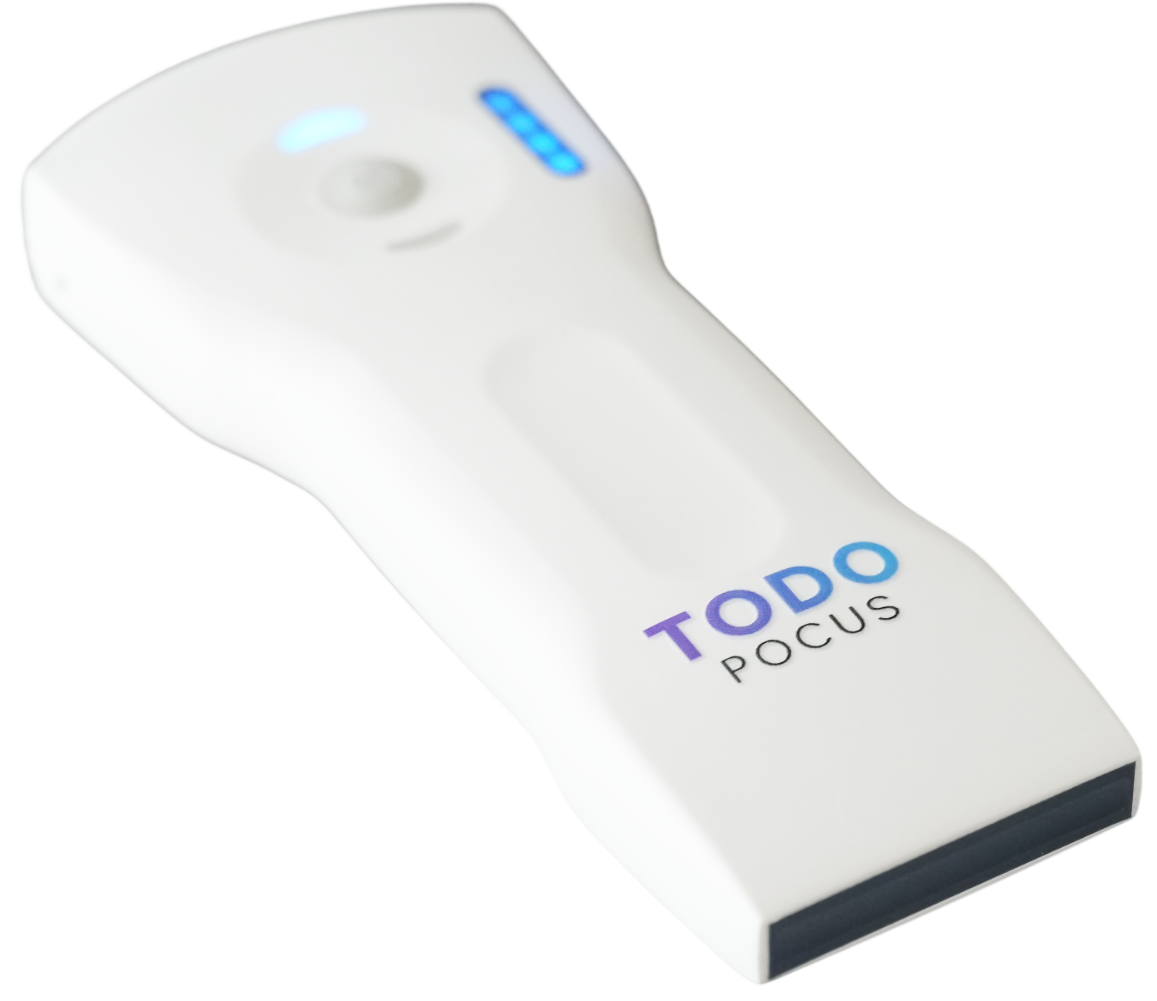









TodoPocus D3-Ultra vs. Clarius L15 HD3 for Sports Medicine: Which Handheld Ultrasound Is Better?


The Clarius L15 HD3 is designed primarily for high-resolution superficial imaging. The TodoPocus D3-Ultra takes a broader tri-mode approach, combining linear, convex, and phased-array scanning in one device for both superficial MSK and deeper joint imaging.
For a sports medicine practice, the key question is which scanner best balances superficial detail, depth, guided-procedure workflow, platform compatibility, and total cost.
Table of Contents
Short Answer:
For most generalist sports medicine and orthopedic clinics, the TodoPocus™ D3-Ultra is the better all-round choice because one device covers superficial MSK, deeper joints, and guided procedures across iOS, Android, and Windows without recurring software fees.
Choose the Clarius L15 HD3 when your work is concentrated on high-resolution superficial MSK, nerve, and small-parts imaging and you value an AI-assisted workflow. Core imaging works without Clarius Essentials, while advanced features such as Pulsed Wave Doppler, Needle Enhance, specialty software, DICOM, and expanded storage require a paid plan.
Brief Introduction
Both handheld ultrasounds are wireless, app-driven, pocket-sized scanners. They are just built around different ideas.
| Feature | TodoPocus™ D3-Ultra | Clarius L15 HD3 |
| Best for | Mixed sports medicine and orthopedic practices requiring superficial and deep imaging | Dedicated superficial MSK, nerve, small-parts, and high-resolution linear imaging |
| Probe design | Tri-mode linear, convex, and phased-array scanner | High-frequency linear scanner |
| Frequency range | Convex 3.2/5.0 MHz; Linear 7.5/10 MHz; Phased 3.2/5.0 MHz | 5 to 15 MHz |
| Max scanning depth | Linear: 20–100 mm; Convex/Phased: 90–300 mm | Up to 70 mm |
| Imaging modes | B, M, Color, Power, and Pulsed Wave Doppler included | B, M, Color, and Power Doppler included; Pulsed Wave Doppler available through Clarius Essentials |
| Guidance and automation | Puncture Assist, presets, body marks, and measurement tools included | Standard clinical applications included; Needle Enhance, MSK AI, T-Mode, voice controls, and specialty software available through Essentials |
| Platforms | iOS/iPadOS, Android, and Windows | iOS/iPadOS and Android; no Windows or ChromeOS support |
| Continuous scan time | Approximately 2 hours per charge; wireless charging | Approximately 60 minutes per charge; approximately 90 minutes to charge |
| IP rating | IP67 | IP67 |
| Form factor | 156 x 65 x 20 mm, 263 g | 147 x 76 x 32 mm, 290 g |
| Software/storage | All included, local-first, DICOM to PACS | Core included: advanced features and storage via membership |
| Connectivity | Wireless Wi-Fi to device app; local DICOM to PACS | Wi-Fi 802.11abgn, Bluetooth, DICOM, Cloud |
| Upfront price | Two variants: Standard Clinical White: $3,470 Thermal Optimised Space Silver Shell: $3,570 (taxes/shipping included) | $3,795 for the scanner on the current U.S. store (taxes/shipping/duties extra) |
| Software plan | No recurring software | Essentials is optional for core scanning; $695/year, $1,785/3 years, or $2,500 one time |
| Approximate 3-year cost | $3,470 or $3,570 | $3,795 core only; $5,580 with the 3-year Essentials plan; $5,880 if Essentials is paid annually (before duties/shipping) |
| Warranty | 3 years, extendable to 5 | 3 years, extendable 1 to 3 years |
| Returns | 30-day risk-free | 30-day risk-free |
Current pricing sources (Checked on 18th July, 2026): the Clarius L15 purchase page, the Clarius specifications page, and the TodoPocus D3-Ultra product page.Specifications may vary by region, bundle, and firmware version, confirm current numbers with the manufacturer before procurement.
TodoPocus™ D3-Ultra vs. Clarius L15 HD3: Best Ultrasound for Sports Medicine
Let’s now walk through a more comprehensive version, pulling in the details we’ve covered across the table above:
1- Superficial Soft Tissue Imaging and Resolution (The MSK Test)

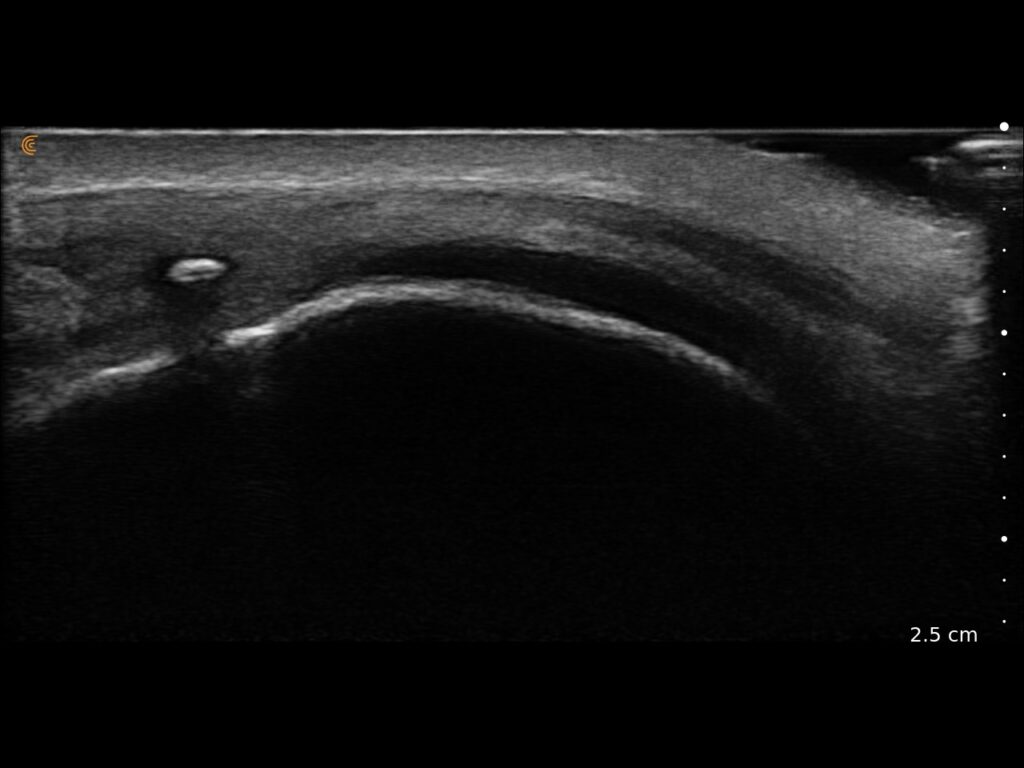
This is where high-frequency linear hardware earns its name. Higher frequency means a shorter wavelength, which resolves finer detail.
The Clarius L15 at its 15 MHz ceiling, draws a tighter superficial picture than the D3-Ultra’s linear mode, which stops at 10 MHz. That extra frequency shows up as crisper near-field detail in some of the structures sports physicians study most closely:
- The ulnar collateral ligament (UCL)
- The fibrillar architecture of the Achilles
- The plantar fascia
- Fine peripheral nerves
Median-nerve Imaging Examples:

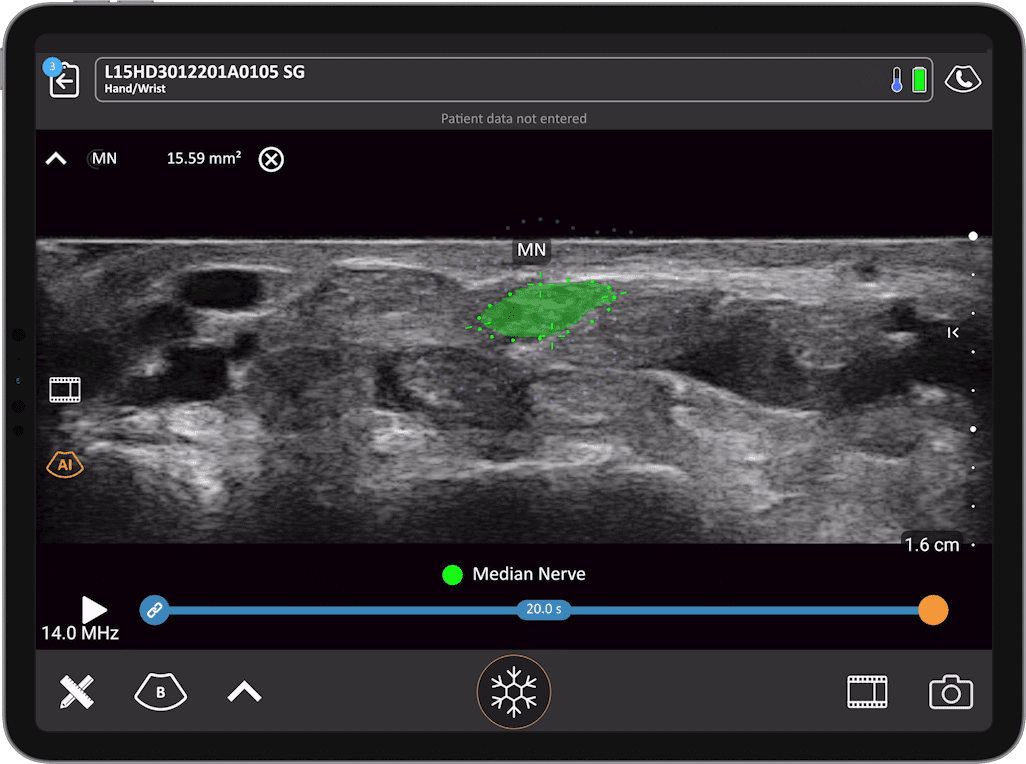
*These images illustrate different clinical workflows and are not a controlled head-to-head image-quality comparison.
TodoPocus™ D3-Ultra covers the bread and butter of MSK work without trouble, muscle tears, hematomas, fluid collections, and most tendinopathies. The lower frequency ceiling mainly shows at the very surface, where micro-tears and the finest tendon fibrils sit.
That said, the D3-Ultra offers 256-level grayscale with adjustable dynamic range and a graded noise-reduction setting, which helps lift subtle hypoechoic tendinopathies out of the background. Good grayscale and TGC make the available detail more readable, but they cannot create resolution the transducer frequency does not support.

| Verdict: Clarius wins the most demanding superficial work; the D3-Ultra is clinically sufficient for general MSK. |
2- Deep Joint, Hip, and Shoulder Assessments
Where high frequency buys resolution, it gives up penetration. That is where the comparison flips.
The Clarius L15 HD3 stops at about 7 cm, a result of its high-frequency design. That is fine for superficial joints but becomes a hard wall for deeper targets such as:
- Native adult hip joint
- Deep gluteal and hamstring origins
- Many shoulder views in larger or muscular patients
The TodoPocus™ D3-Ultra, carries convex and phased modes that reach 90 to 300 mm. This means the same device that images a finger pulley in linear mode can switch to convex for a deep hip effusion, or to phased for a small-footprint view between ribs or a quick cardiac glance.
| Verdict: For a practice that sees a full range of patient sizes and joint depths, that single-probe range is the D3-Ultra’s clearest practical edge. |
3- Procedural Accuracy: Imaging and Ultrasound-guided Injections
Now let’s compare what each app actually gives you to work with day to day.
- Presets and measurement tools:
The Clarius L15 HD3 comes with two presets with calculation packages out of the box; vessels and breast. Although other presets (Hand/Wrist, Foot/Ankle, Knee, Shoulder, MSK, Nerve/Pain, and more) without speciality calculations are also available in the app.
The TodoPocus™ D3-Ultra includes 15+ presets, 18+ body marks, two customizable preset slots, smart measurement tools, and Puncture Assist without a recurring software fee.
- Imaging modes:
The Clarius L15 includes Color and Power Doppler in its base configuration, but Pulsed Wave Doppler is only available as an optional add-on through membership.
The TodoPocus™ D3-Ultra includes B-mode, M-mode, and the full Doppler suite, Color, Power, and Pulsed Wave, flat, with nothing held back.
For sports medicine workflows that rely on PW Doppler to assess tendon vascularity or differentiate active hyperemia from chronic tendinosis, this is a meaningful difference.
- Guided injection
From corticosteroid and PRP to orthobiologics, guided injections are a routine procedure for sports physicians now, and needle visibility is what makes a procedure clean instead of frustrating.
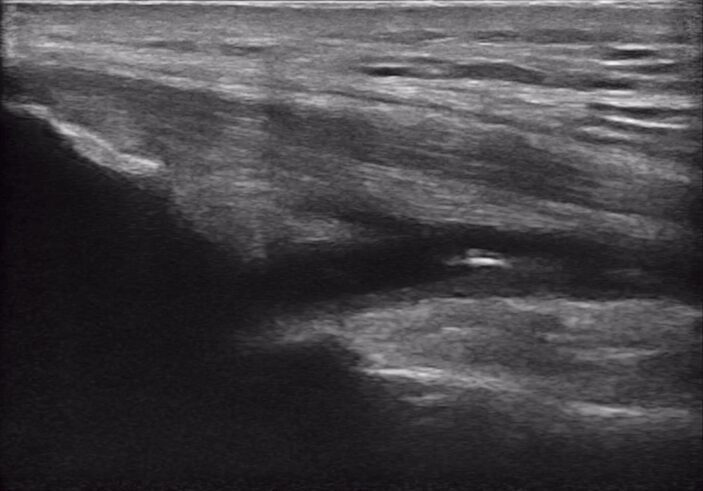
Clarius Needle Enhance: It’s a software-based tool that improves needle visibility, particularly at steeper insertion angles. It is available through Clarius Essentials
D3-Ultra Puncture Assist: A puncture-assist overlay that highlights the needle path for freehand work and repeatable in-plane and out-of-plane trajectories, which some proceduralists prefer for deeper or higher-stakes targets.
| Hardware Detail: TodoPocus™ also offers a probe-specific mount that clips securely onto the machine and locks the needle into the exact imaging plane of the ultrasound wave for precise alignment. This further makes the procedure easier and more precise for trained and trainee staff alike. Clarius has no equivalent option available. |
| Verdict: Clarius provides a more software-assisted needle-visualization workflow, while the D3-Ultra includes visual guidance and adds the option of a physical needle guide. |
4- Software Ecosystem for Image Storage and Sharing
This is the real philosophical split, and it hits the budget.
- Storage
Clarius L15 HD3 can perform core imaging without an active Essentials plan. Clarius Essentials adds local image export, unlimited Clarius Cloud storage, exam management, DICOM, procedure recording, specialty software, and advanced imaging tools.
TodoPocus™ D3-Ultra provides local storage, cine-loop recording, and JPEG, PNG, MP4, and DICOM export without a recurring software fee. It supports iOS, Android, and Windows, while Clarius supports iOS/iPadOS and Android mobile devices.
| Verdict: Clarius offers the more developed cloud, AI, and centralized exam-management ecosystem. The D3-Ultra offers broader platform compatibility, local-first storage, and predictable software costs. |
- Platform & Export
On Clarius L15 HD3, you can also record full procedures, but again, only with a membership active. Clarius only works on phones, either iOS or Android.
TodoPocus™ D3-Ultra supports multiple image formats, JPEG, PNG, MP4, and cine loop recording available at 100, 200, 500, or 1000 frames. The D3-Ultra is compatible with Android, iOS, and Windows, so it can run on whatever device is already in the room, phone, tablet, or clinic laptop.
| Verdict: The upside for Clarius is a polished, continuously updated, cloud-connected workflow. But as integral features sit behind the membership, so everyday usefulness is tied to an ongoing fee. The trade-off for TodoPocus™ D3-Ultra is no managed cloud and a lighter AI automation layer. However, it is more universally compatible and allows full implementation of the features. |
5- Durability and Cleanability
Both are pocket-sized and wireless. The D3-Ultra is a touch lighter and thinner in the hand; the Clarius is slightly heavier.
Clarius L15 HD3 is a 290g machine and has two programmable buttons on the probe itself. It’s compatible with standard transducer covers and sheaths and can be fully wrapped to prevent contamination.
That said, its rated ambient operating range is -20°C to 50°C, and the company recommends against continuous use beyond 20 minutes. Earlier Clarius devices drew a fair number of complaints about overheating, though hardware upgrades since then have made this far less of an issue.
TodoPocus™ D3-Ultra is a touch lighter and slimmer, and tolerates immersion-level cleaning and the occasional knock in a busy clinic. It also fits standard probe covers for contamination prevention, and includes a physical button on the device.
Heat dissipation has always been a relative strength of TodoPocus, and the newer silver housing has improved this further, keeping the probe more comfortable in the hand during longer scans.
| Verdict: For high-volume or back-to-back scanning, the D3-Ultra’s IP67 rating and better heat dissipation make it the more practical daily driver. It also has a slight edge for practices that operate in less controlled environments. |
6- Learning Curve and Training Considerations
Both of these devices lower the barrier to point-of-care scanning, just differently.
The Clarius L15 is faster to feel comfortable with for a narrow superficial scope. AI assistance, specialty presets, and structure highlighting actively steer a newer user toward a usable image, and T-Mode almost acts as a built-in tutor.
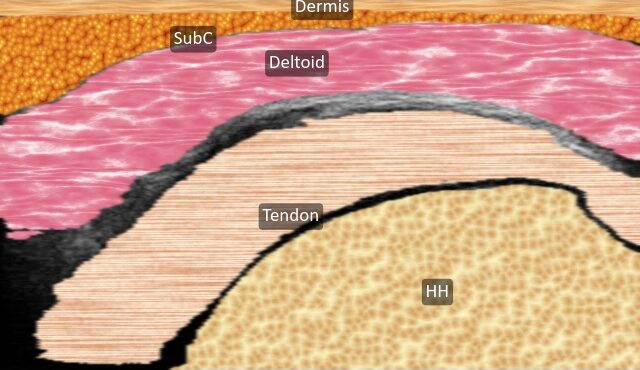
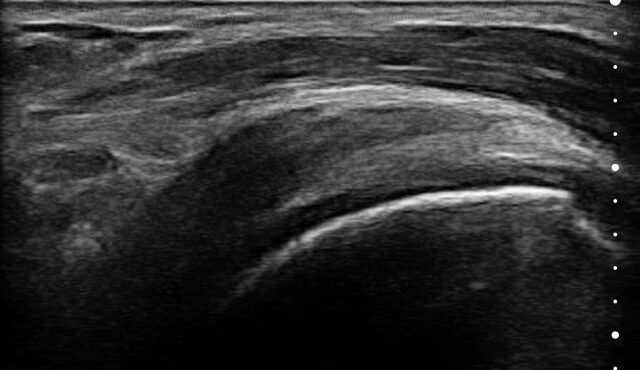
The TodoPocus™ D3-Ultra offers a bit more with because it’s tri-mode means learning all linear, convex, and phased. It doesn’t offer AI automation but has presets, body marks, and smart-measurement package help standardize common exams.
Long term, it also tends to train better operators, once you’re comfortable across all three modes, you can easily switch to other ultrasound devices that may not have advanced functionalities like Clarius T-Mode, because the underlying skill set transfers more broadly.
| Verdict: Clarius gets you comfortable quicker within a narrow scope thanks to heavier AI hand-holding. The D3-Ultra has a slightly steeper start but rewards it with far wider range, so one trained operator covers more of the practice’s needs with one device. |
7- Financial and Practical ROI for Independent Practices
Current U.S. pricing creates two distinct ownership models. The D3-Ultra uses a one-time purchase with no recurring software fee. The Clarius L15 HD3 can be purchased for core imaging without Essentials or combined with an optional Essentials plan for advanced imaging, AI, storage, and workflow features.
The Clarius L15 is $3,795 for the scanner, plus roughly $695/year membership, with shipping, local taxes, and duties billed separately, unlocks the ecosystem that defines the product:
The D3-Ultra is $3,470 or $3,570 (depending on the variant), with delivery and taxes covered, a 3-year warranty extendable to 5, every feature unlocked, no subscription.
Let’s do a breakdown of costs over three years:
| Cost Item | TodoPocus™ D3-Ultra | Clarius L15 HD3 |
| Scanner hardware | $3,470 / $3,570 | $3,795 |
| Shipping, taxes, and duties | Included | Calculated separately or varies by region |
| Core imaging software | Included | Included |
| Optional software plan | None | $695/year, $1,785/3 years, or $2,500 one time |
| 3-year total: core imaging only | $3,470 / $3,570 | $3,795 |
| 3-year total with advanced plan | $3,470 / $3,570 | $5,580 with the 3-year plan or $5,880 with annual billing |
| Recurring fee? | None, ever | No for core imaging; optional for advanced features and workflows |
*Clarius totals use current U.S. pricing checked on July 17, 2026. The $5,580 estimate uses the prepaid three-year Essentials plan; three annual payments produce a total of $5,880. Shipping, taxes, and duties are not included in the Clarius estimate.
| Verdict: Clinics that depend on AI-assisted superficial imaging and centralized cloud workflows may find Clarius Essentials worth the additional cost. Mixed sports medicine and orthopedic practices prioritizing broader probe coverage and predictable ownership costs will generally receive more all-round value from the D3-Ultra. |
Final Verdict and Clinical Recommendations
There is no universal winner here, just a better fit for a given practice.
| If your priority is… | Recommended device |
| Maximum superficial resolution | Clarius L15 HD3 |
| Deep joints plus superficial in one device | TodoPocus™ D3-Ultra |
| Lowest total cost of ownership | TodoPocus™ D3-Ultra |
| Mature cloud and AI-guided workflow | Clarius L15 HD3 |
| No subscriptions, all features unlocked | TodoPocus™ D3-Ultra |
| Dedicated MSK / aesthetics specialist | Clarius L15 HD3 |
| Generalist orthopedic / sports clinic | TodoPocus™ D3-Ultra |
By TodoPocus™
TodoPocus™ designs and supplies wireless, app-based handheld ultrasound systems built to bring affordable, full-feature point-of-care imaging into everyday practice, from emergency and primary care to MSK, anesthesia, and aesthetics.
This article was prepared by the TodoPocus™ team of clinical and product professionals to help practitioners weigh their options objectively. As the maker of the D3-Ultra, we have tried to keep the comparison fair and grounded in published specifications rather than promotion.
If you have questions about device selection, configuration, or how the D3-Ultra fits your workflow, feel free to contact our team.
FAQs
Q: Does the D3-Ultra require an internet connection to function wirelessly?
No. The D3-Ultra connects directly to your phone, tablet, or Windows device over its own wireless link and stores images locally, so it works fully offline in basements, rural clinics, or anywhere without internet. You only need connectivity to move studies into a networked PACS. That independence from the cloud is a real plus in remote or low-bandwidth settings.
Can the Clarius L15 HD3 be used for deep hip injections?
Generally no. The L15 HD3 has a maximum imaging depth of 7 cm, which can be limiting for deeper adult hip-joint targets, particularly in larger or muscular patients. Although the app includes Hip & Thigh applications, the physical depth limit remains unchanged. A scanner with convex or phased-array capability, such as the D3-Ultra, provides greater penetration for deeper hip procedures.
Q: Which device integrates better with hospital PACS and EHR networks, Clarius or TodoPocus?
Both support DICOM and PACS, but the models differ. The D3-Ultra includes local DICOM-to-PACS export at no extra cost. Clarius offers DICOM and a developed cloud platform, though DICOM and cloud exam management both of which are available with annual paid membership. For simple no-fee PACS export, the D3-Ultra is easier; for centralized cloud management across many users, Clarius offers more.
Q: Is the TodoPocus™ D3-Ultra’s image quality good for diagnosing tendon and ligament injuries?
Yes, its linear mode (7.5/10 MHz) with 256-level grayscale handles muscle tears, tendinopathies, and ligament assessment competently. It is capable and versatile for everyday sports-medicine diagnosis across a range of structures and depths. For the very finest superficial muscular detail, you might want to prefer TodoPocus™ L20Pro with dedicated 16-20 MHz linear transducer.
Q: What is the real cost difference between TodoPocus™ D3-Ultra and Clarius L15 once subscriptions are included?
The D3-Ultra costs $3,470 for Clinical White or $3,570 for Space Silver, with delivery, taxes, duties, and software included. The Clarius L15 HD3 scanner is currently $3,795 in the U.S. Core imaging does not require Essentials. With the prepaid three-year Essentials plan, the three-year total is approximately $5,580; paying $695 annually produces a total of approximately $5,880 before applicable shipping, taxes, and duties.
Q: What is the scan time limit for Clarius and TodoPocus™ devices?
Clarius advises short continuous scans to manage transducer temperature and battery life, giving roughly 60 minutes per charge. The D3-Ultra cites about two hours of scanning per charge. The updated version now comes with an updated housing which gives it better heat management, though it’s recommended to take intervals between longer scans.
Q: Which device is easier for a clinician new to ultrasound?
The Clarius gets you comfortable quicker for narrow superficial exams, thanks to heavy AI guidance, presets, and structure highlighting. The D3-Ultra has a slightly steeper start, since it offers tri-mode scanning, but it rewards that with much wider coverage and training.
Is Clarius Essentials required to use the L15 HD3?
No. The L15 HD3 can perform core B-Mode, M-Mode, Color Doppler, and Power Doppler imaging without an active Essentials plan. Essentials adds Pulsed Wave Doppler, Needle Enhance, specialty and AI software, DICOM, local image export, Cloud storage, exam management, and other advanced workflows.