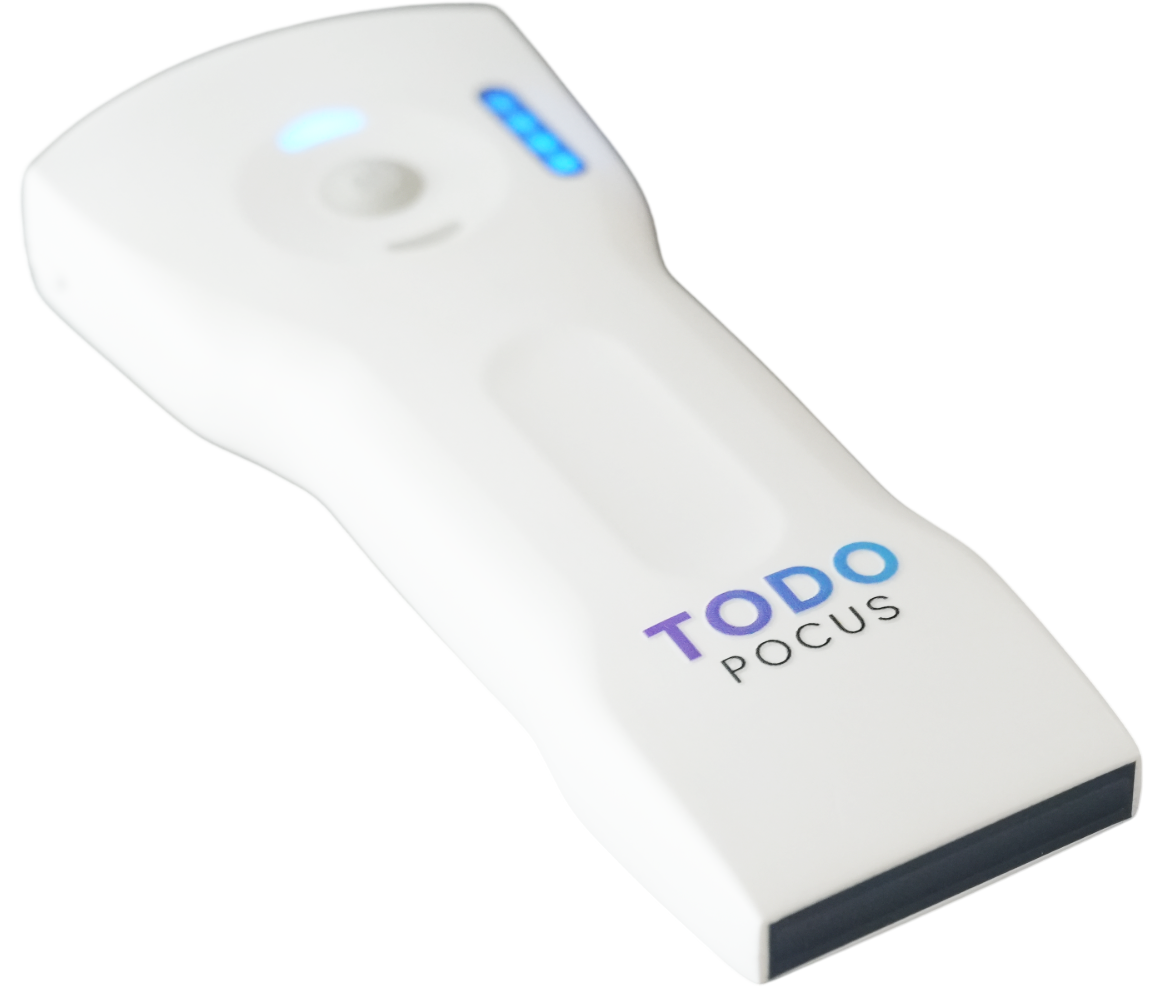














Best Transrectal & Biplane Prostate Ultrasound Probes (2026): Practical Buying Guide for Urology

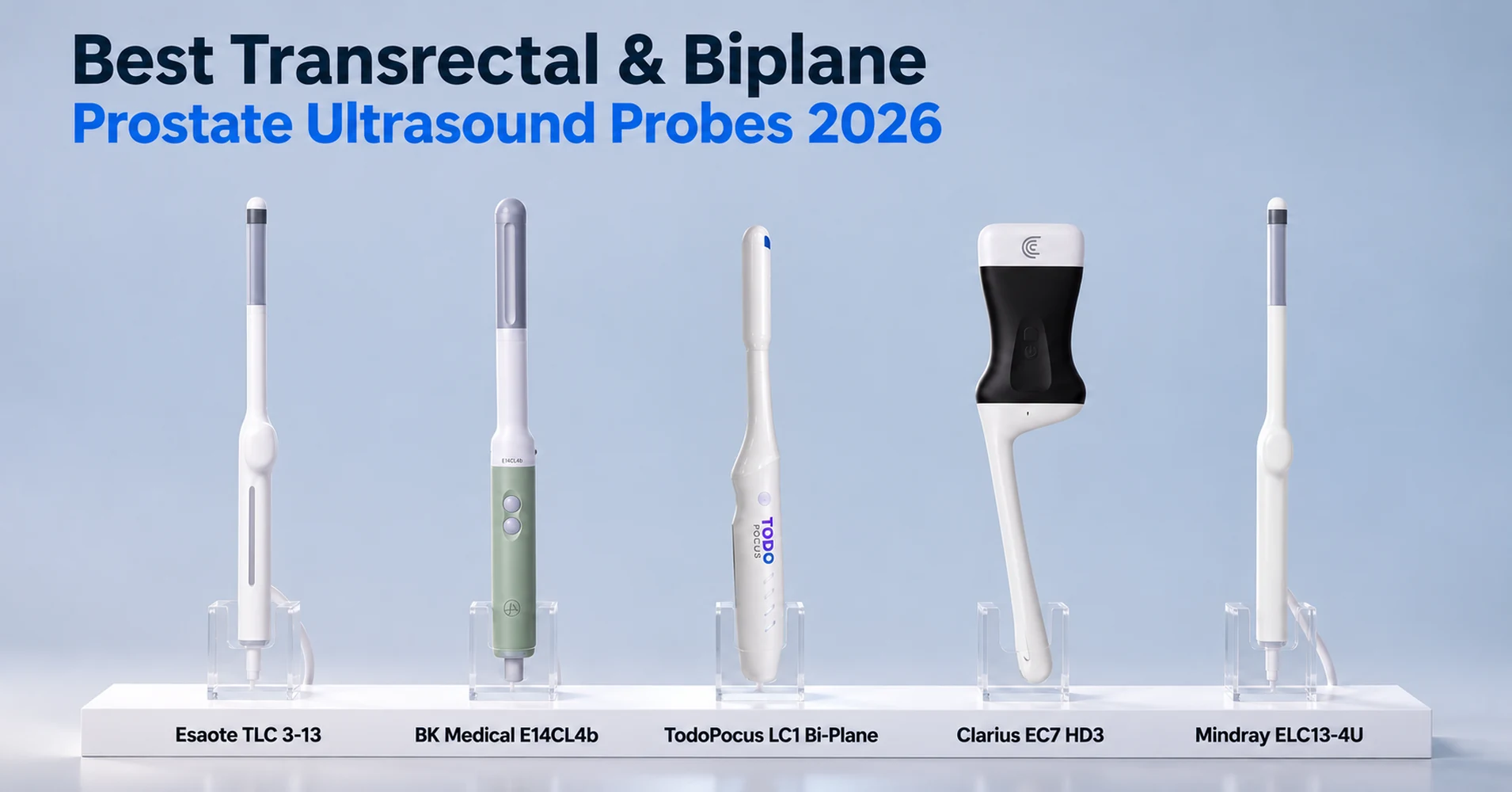
If you have ever tried guiding a transperineal prostate biopsy or sizing an enlarged median lobe with a single-plane end-fire wand, you already know the frustration. Twisting the probe 90 degrees inside the rectum just to switch from transverse to sagittal shifts your landmarks and makes needle tracking harder than it needs to be.
Shopping for a transrectal prostate ultrasound probe comes down to practical trade-offs that rarely jump off a brochure: whether the shaft carries both a convex and a flat linear array (true biplane), whether your caseload actually needs built-in MRI-fusion software, how easy the probe is to sheath and disinfect between rooms, and what you will really spend over five years.
Quick Reference: Top Transrectal & Biplane Prostate Setups at a Glance
If you are outfitting an outpatient urology lane, an ASC procedure room, or a multi-office group, here is an honest look at how these five urology ultrasound options compare day to day.
Índice
5 Best Transrectal & Biplane Prostate Ultrasound Probes in 2026
1. TodoPocus™ LC1 Bi-Plane — Best Cordless Option for Exam-Room Sizing & Freehand Biopsy

Resumen de especificaciones:
- Precio: $2,370 one-time purchase (optional Reusable Endocavity Needle Guide: $499)
- Arrays & FOV: True Biplane — Transverse Convex + Longitudinal Linear (6.5/8.0 MHz, 149°, 4–10 cm depth)
- Conectividad & batería: Wi-Fi inalámbrico plus wired USB cable (iOS, Android, Windows); 1.5-hr battery (wireless & USB charging)
- Weight & Build: 200 g, sealed IP67 housing ($0/year software or DICOM fees)
Most wireless endocavity probes under $6,000 only give you a single curved array on the tip. The TodoPocus™ LC1 is one of the very few pocket units that builds both a transverse convex array and a flat longitudinal linear array onto a cordless 200 g shaft. When your main OR cart is tied up down the hall, you can put true biplane TRUS into a regular consultation room for less than a quarter of a replacement cart probe.
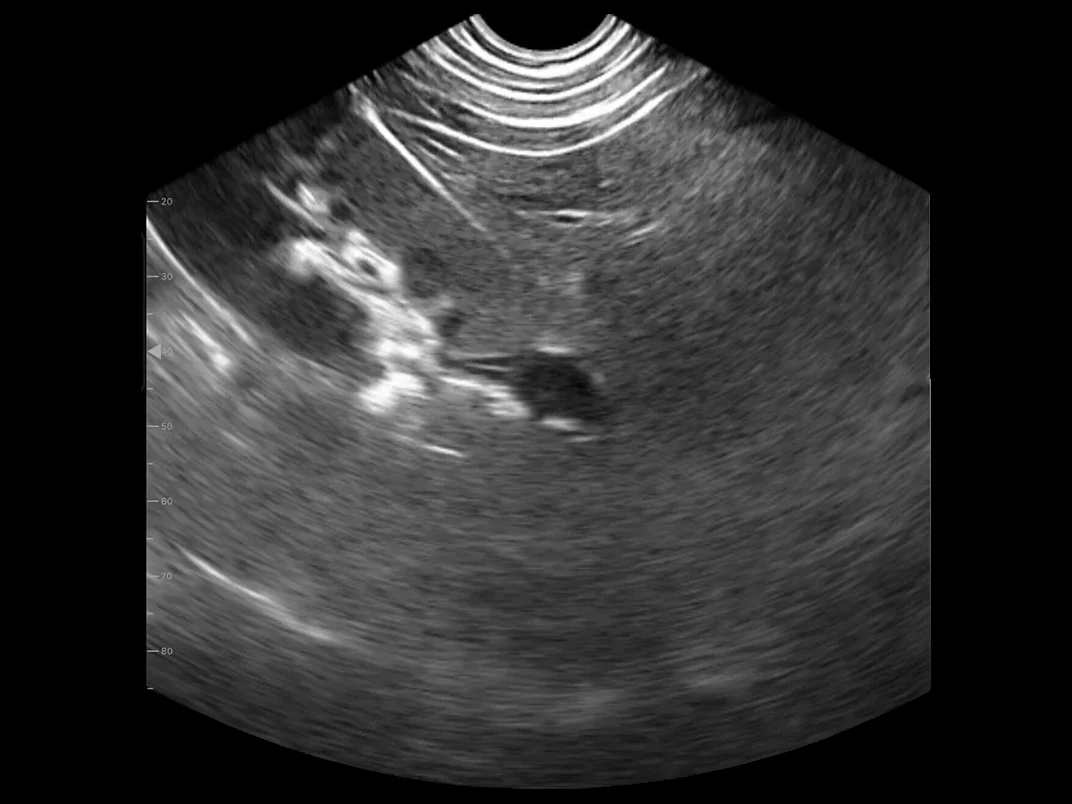
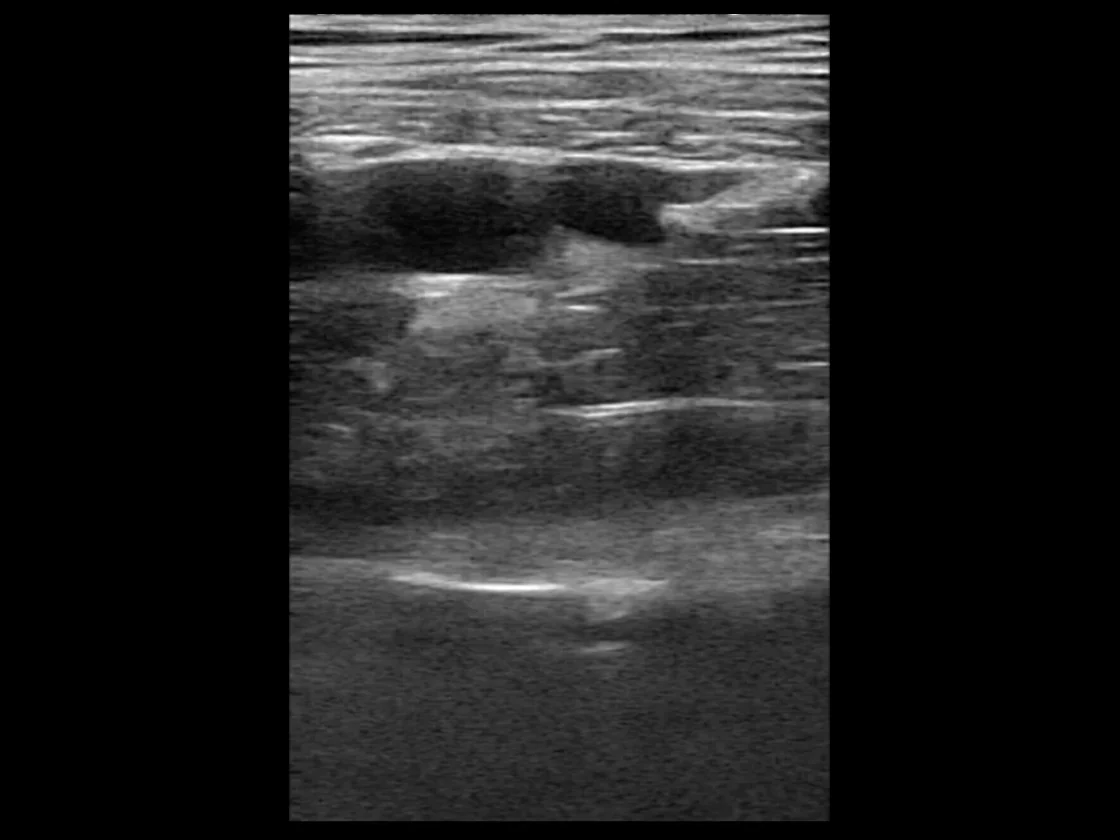

Day to day, it covers routine office prostate work without extra steps: pre-op BPH volumes (UroLift®, Rezūm™, HoLEP workups), periprostatic nerve blocks under Color Doppler, and freehand transrectal or transperineal biopsies using the on-screen In-Plane, Out-of-Plane, and Grid guides paired with the $499 sterilizable needle bracket.
Ventajas:
- True Convex + Linear biplane tip: Checks cross-sectional symmetry and tracks biopsy needles parallel along the shaft without 90° wrist rotation.
- Wi-Fi plus wired USB backup: Connects to iPads, Android tablets, and Windows PCs, so long biopsy blocks never stall if the battery dips.
- Fast sterile turnover: Sealed 200 g IP67 body slips completely inside one endocavity cover with no heavy cord dragging across your perineal tray.
- All-in $2,370 price ($0/yr fees): Unlocks Color, Power, and PW Doppler, manual calipers, 1,000-frame cine loop, and local DICOM export from day one.
Contras:
- 32-channel handheld beamforming: Does not match the ultra-fine 4–14 MHz harmonic contrast or elastography of a full hospital tower.
- No built-in software MRI-fusion: Built for exam-room sizing (CPT 76872) and systematic or cognitive-fusion biopsies (55707 / 55709), not automated MRI overlay.
- 1.5-hour wireless battery: Back-to-back procedure mornings require mid-shift charging or plugging in the USB cable.
2. GE HealthCare BK Medical E14CL4b (9048) — The Unquestioned OR & Stepper-Grid Benchmark
Resumen de especificaciones:
- Precio: ~$10,000–$15,000+ per probe (~$11,000+ refurbished; $55,000–$95,000+ with bkActiv / bk5000 cart)
- Arrays & FOV: Simultaneous True Biplane — Convex + Linear (4–14 MHz wideband)
- Conectividad: Cabled proprietary transducer for bkActiv, bk5000, and bkSpecto consoles
- Software Fees: $0 mandatory base fee (paid bkFusion license and service contracts extra)
Walk into almost any hospital urology OR or high-volume ASC, and there is a good reason a BK Medical tower sits next to the table. Paired with a bkActiv or bk5000 console, the E14CL4b (9048) gives you sharp 4–14 MHz simultaneous biplane imaging, physical freeze and plane buttons right under your thumb, and rock-solid frame rates.
You are not just paying for grayscale here—you are buying into BK’s mechanical ecosystem. For brachytherapy steppers, template saturation biopsies (CPT 55706), focal cryo/HIFU ablation, or bkFusion software MRI-ultrasound registration, BK integrates with cradle stabilizers better than anything else on the market.
Ventajas:
- Standout 4–14 MHz simultaneous biplane image: High frame rates and handle smart buttons make single-handed OR scanning effortless.
- Turnkey interventional ecosystem: Plugs straight into industry-standard brachytherapy steppers, stabilizer arms, and bkFusion MRI targeting.
Contras:
- $55,000–$95,000+ capital commitment: Too expensive and bulky to place inside everyday outpatient consultation rooms.
- High cabled-probe repair exposure: Dropping a crystal head or wetting a multi-pin plug during HLD soaking means a $10,000+ replacement bill.
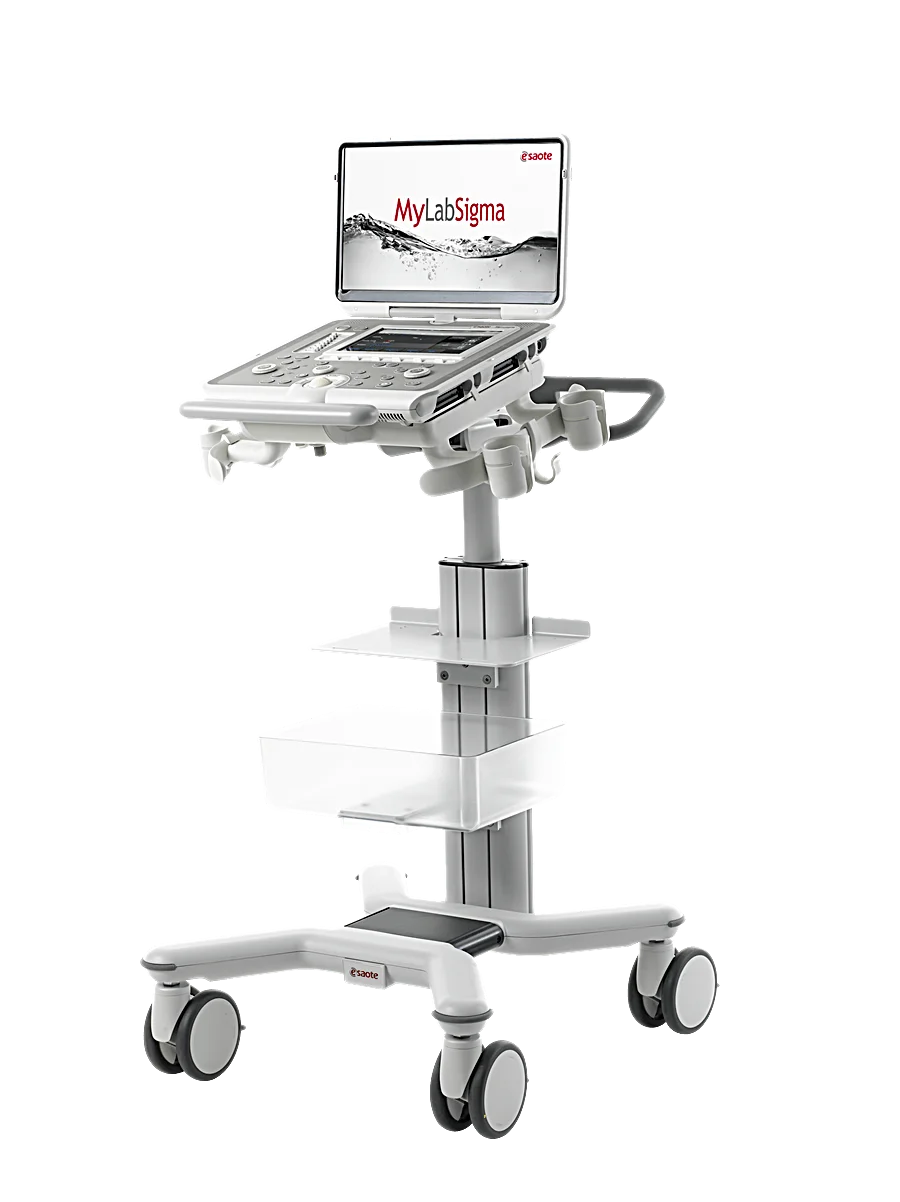
3. Esaote TLC 3-13 Biplane (MyLab™ Omega) — Best Luggable Laptop If You Travel Between Sites
Resumen de especificaciones:
- Precio: $25,000–$45,000+ New ($14,000–$22,000+ refurbished laptop + biplane probe)
- Arrays & FOV: True Electronic Biplane — Convex (3–9 MHz, up to 197°) + Linear (4–13 MHz, 58 mm length)
- Conectividad: Cabled probe on a hand-carried clamshell console (MyLab™ Omega / Sigma)
- Software Fees: $0 base software (optional paid UroFusion upgrade)
If you cover two or three satellite offices a week and want tactile console keys—plus the option to add software MRI-fusion—without wheeling a full tower onto an elevator, Esaote’s MyLab™ Omega paired with the TLC 3-13 biplane probe hits a practical middle ground.
What urologists tend to appreciate most on the TLC 3-13 is its 58 mm linear array length. On an 80–100 cc gland, shorter linear arrays sometimes clip the base or apex in sagittal view, whereas 58 mm fits the whole prostate cleanly in one frame. You can start with standard 2D/Doppler biopsies using Esaote’s reusable TP/TR brackets and unlock UroFusion later as targeted volume grows.
Ventajas:
- Generous 58 mm linear footprint (3–13 MHz): Frames large 80–100 cc BPH glands cleanly from base to apex without clipping edges.
- Fusion-ready clamshell portability: Lets multi-site groups share one upgradeable console across satellite clinics.
Contras:
- $25,000–$45,000+ new price tag: Even pre-owned $14,000+ setups require capital approval and carry short 60- to 90-day probe warranties.
- Traditional cord and fan upkeep: Staff still drape probe cables and wipe down a fan-cooled laptop body between every patient.
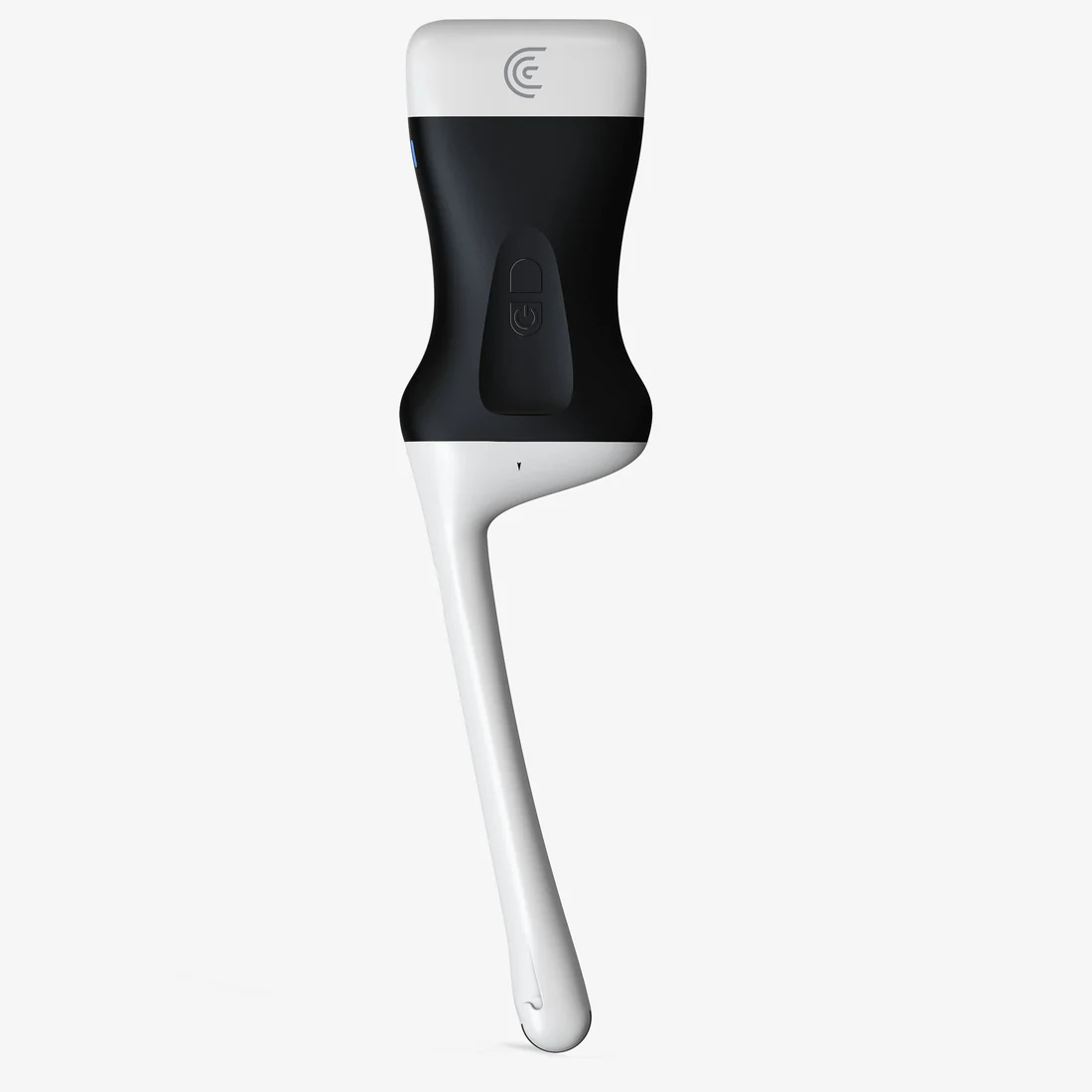
4. Clarius EC7 HD3 — Clean Wireless Image, But Check the Array Before Buying for Prostate
Resumen de especificaciones:
- Precio: $5,395 hardware + $695/year Essentials plan (or $2,500 one-time license; $8,870 5-yr cost)
- Arrays & FOV: Single-Plane End-Fire Only — Micro-Convex (3–10 MHz, up to 15 cm depth)
- Conectividad & batería: Wireless Wi-Fi to iOS & Android; ~60-minute battery
- Weight & Build: 326 g, IP67 submersible
Because Clarius is one of the biggest names in wireless POCUS, the EC7 HD3 comes up constantly when clinics shop for a cordless transrectal ultrasound probe. Its 3–10 MHz image quality is undeniably crisp, and active subscribers get hands-free voice controls (“freeze”, “save”) that come in handy when both hands are gloved.
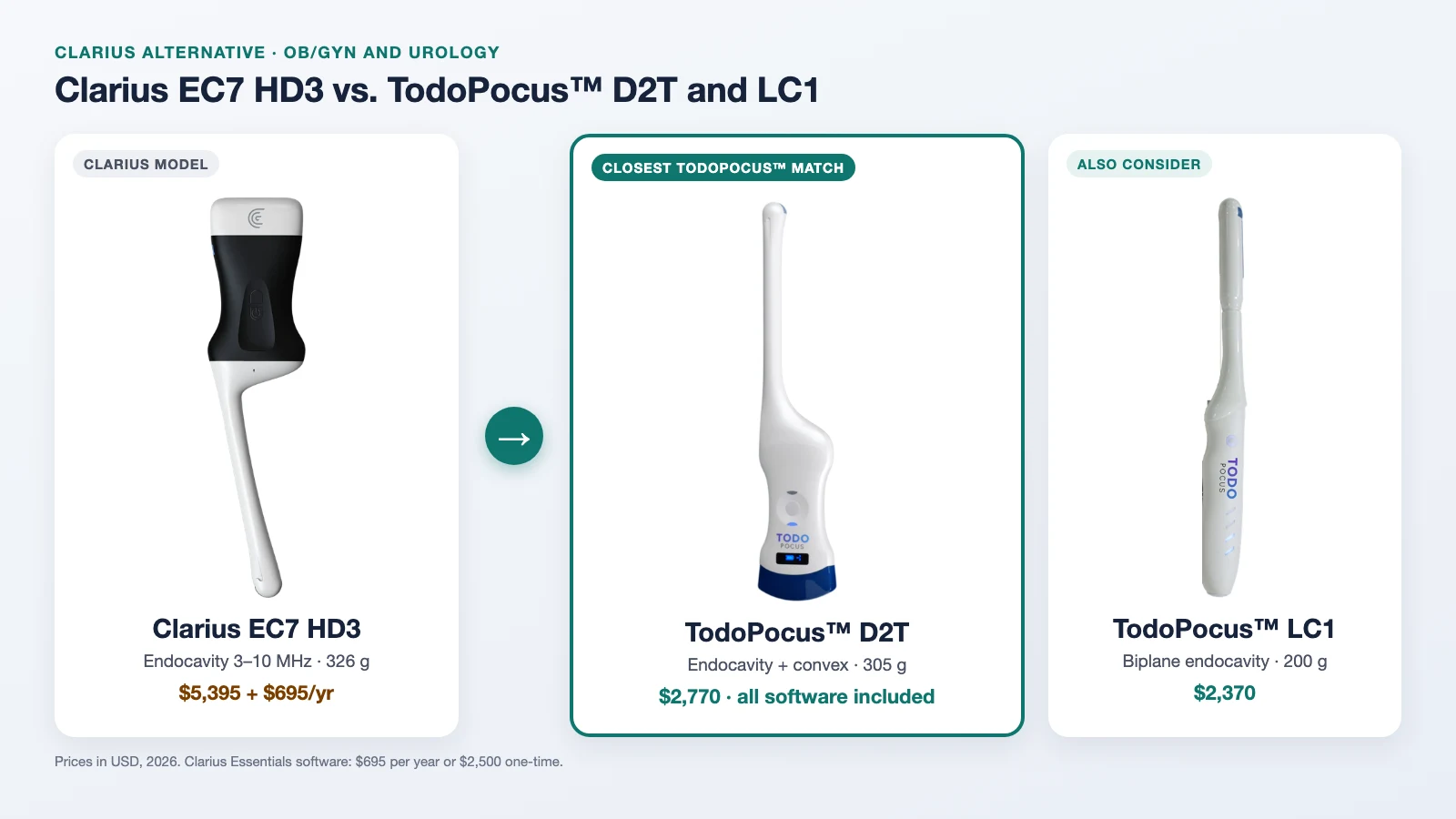
The catch for prostate work is easy to miss until you check the tip geometry: the EC7 HD3 is single-plane end-fire, not biplane. There is no longitudinal linear array along the shaft, so you have to rotate the handle 90° by hand between views. (Clinicians who want cordless true biplane for male prostate work typically look at the $2,370 TodoPocus™ LC1 instead, while mixed urogynecology or OB/GYN clinics wanting single-plane end-fire plus an abdominal convex head can compare the dual-probe TodoPocus™ D2T at $2,770 with $0/yr fees.)
Ventajas:
- Sharp 3–10 MHz end-fire grayscale: Penetrates cleanly to 15 cm for quick diagnostic sweeps, pelvic floor checks, and OB/GYN exams.
- Hands-free voice commands (with plan): Helpful for freezing and saving clips solo during sterile procedures.
Contras:
- Single-plane end-fire only (not biplane): Lacks a longitudinal linear array, requiring 90° wrist rotation and limiting parallel transperineal needle views.
- $8,870 five-year ownership cost: PW Doppler, DICOM export, and cloud saving require a $695/year membership on top of the $5,395 hardware price.
5. Mindray ELC13-4U Biplane (Resona Series) — Best When Shared With Hospital Radiology
Resumen de especificaciones:
- Precio: $40,000–$85,000+ (full hospital cart configuration)
- Arrays & FOV: True Biplane — Micro-Convex + High-Density Linear (3.5–9.5 MHz)
- Conectividad: Cabled pinless console probe for Mindray Resona towers
- Software Fees: $0 annual software fee (hospital service agreements vary)
When a hospital radiology department and urology service split the budget on one high-end cart, Mindray’s Resona platform with the ELC13-4U biplane probe is a strong contender. Alongside clean ZST+ dual-plane imaging, its standout feature is quantitative shear-wave elastography (SWE), which color-maps stiff peripheral-zone areas in kPa that often blend in on standard B-mode.
(Academic centers with dedicated six-figure focal-biopsy budgets also evaluate Fujifilm’s Arietta + C41L47RP biplane o ExactVu™’s EV29L 29 MHz micro-ultrasound at ~$170,000+ used / $200,000+ new—impressive specialty tools, just in a completely different capital bracket than office ultrasound.)
Ventajas:
- Quantitative Shear-Wave Elastography (SWE): Adds objective kPa stiffness mapping alongside standard biplane B-mode and Doppler.
- Shared multi-port radiology cart: Lets one room switch easily between TRUS, renal, abdominal, and high-frequency scrotal probes.
Contras:
- Full $40,000–$85,000+ tower footprint: Built for hospital imaging suites rather than quick private-office exam room expansion.
Side-by-Side Comparison: Geometry, Biopsy Fit & Real 5-Year Cost
Sticker prices look very different once you check whether a probe actually carries a sagittal linear array—or add five years of software fees to unlock DICOM and PW Doppler.
| Característica | TodoPocus™ LC1 | BK Medical E14CL4b | Esaote TLC 3-13 | Clarius EC7 HD3 | Mindray ELC13-4U |
|---|---|---|---|---|---|
| Plane Geometry | True Biplane (Convex + Linear) | True Biplane (Simultaneous) | True Biplane (Convex + 58 mm Linear) | Single-Plane Only (End-Fire) | True Biplane (MC + Linear) |
| Parallel TP Needle View? | Sí (linear array) | Sí (linear + stepper) | Sí (linear + bracket) | No incluye (sector end-fire only) | Sí (linear array) |
| Form Factor | 200 g Cordless + USB | OR Cart + Cabled Probe | Clamshell Laptop + Cable | 326 g Cordless Wi-Fi | Hospital Cart + Cable |
| OS / Display | iOS, Android, Windows | Dedicated BK console | Dedicated MyLab laptop | iOS, Android | Dedicated Resona tower |
| Software MRI-Fusion? | No incluye (cognitive / freehand) | Sí (bkFusion option) | Sí (UroFusion option) | No incluye | Sí (fusion + SWE options) |
| PW Doppler & DICOM | Included standard ($0) | Included on console | Included on console | Requires $695/yr plan | Included on console |
| Coste inicial | $2,370 (+$499 guide) | $10k–$15k+ probe ($55k+ cart) | $25k–$45k+ new ($14k+ used) | $5,395 | $40,000–$85,000+ |
| 5-Year Total Cost* | $2,370 ($2,869 w/ guide) | $55,000–$95,000+ (+service) | $25,000–$45,000+ | $8,870 (or $7,895 buyout) | $40,000–$85,000+ |
*5-Year Total Cost for handhelds includes the software plan needed for Pulsed Wave Doppler and DICOM PACS export (Clarius Essentials at $695/yr or $2,500 one-time buyout). General-purpose handhelds like Butterfly iQ3 and GE Vscan Air are excluded above because neither offers a transrectal probe.
5 Buying Details Worth Checking Before You Sign a Quote
When urologists talk about what actually made a probe easy—or frustrating—to live with after buying it, the conversation rarely centers on brochure megahertz numbers. It usually comes down to these five practical details:
1. “Endocavity” Doesn’t Automatically Mean Biplane
Plenty of portable brochures group OB/GYN transvaginal wands and urology rectal probes under one “Endocavity” label. Before ordering, confirm the shaft physically houses both a transverse convex array and a longitudinal linear array. If your clinic is moving toward office transperineal (TP) biopsies under local block, remember the probe still sits in the rectum while your needle enters through the perineum—and having that flat linear array parallel to the needle shaft is what keeps the whole 18G needle visible without 90° wrist twisting.
2. Deciding Whether You Really Need Software MRI-Fusion in Every Room
Built-in MRI-ultrasound fusion (bkFusion, UroFusion) is well worth the capital outlay in a dedicated ASC or procedure room doing heavy PI-RADS targeted blocks. But if your bottleneck is outpatient consultation rooms—where you mostly need accurate pre-op BPH volumes (30–80 cc UroLift® / Rezūm™ cutoffs vs. >80 cc HoLEP / Aquablation®, plus checking median-lobe IPP) and straightforward freehand biopsies—putting a $2,500–$3,000 cordless biplane probe in the exam lane keeps your main procedure cart free. (Need an external probe for renal hydronephrosis and bladder PVR checks too? Keep those on a separate abdominal/linear handheld rather than trying to eyeball prostate apexes suprapubically.)
3. Manual Calipers vs. Console Auto-Contouring (and Needle Guide Math)
Unlike a $70,000 tower that auto-traces 3D prostate borders, handheld apps keep volume sizing manual: you freeze your transverse and sagittal frames, drop the built-in B-mode linear calipers on L, W, and H, and run the standard 0.52 ellipsoid calculation yourself. In practice that takes 30 seconds, provided the app gives you smooth calipers and a long 1,000-frame cine loop to scroll back if the patient shifts. Also price out needle guides early—disposable brackets add $25–$50+ to every case, whereas a custom reusable sterilizable guide (~$499) pays for itself within a couple of weeks.
4. Room Turnover: Cord Sleeves & High-Level Disinfection (HLD)
Ask your clinic nurse or MA what slows down back-to-back TRUS slots, and it is almost always cable draping and HLD soaking. On a cabled system, staff have to thread a heavy cord through a sterile sleeve and keep expensive multi-pin plugs out of liquid disinfectant. A sealed IP67 cordless probe slips completely inside one standard endocavity cover with an elastic band and wipes or soaks clean without exposed pins to corrode.
5. PACS Archiving & the 2026 CPT 76872 / Biopsy Coding Overhaul
Two quick billing checks save major headaches here. First, payers require permanently archived images to reimburse diagnostic ultrasound—so verify subscription-free DICOM export comes standard rather than locked behind a $695/year cloud plan. Second, make sure your billing templates reflect the January 2026 AMA/AUA prostate biopsy overhaul, which deleted CPT 55700 and bundled ultrasound guidance (76872 and CPT 76942) directly into the new biopsy codes:
| What You Did in Clinic (2026) | CPT Code to Bill | Common Billing Trap to Avoid |
|---|---|---|
| Standalone Diagnostic TRUS (BPH pre-op sizing, PSA workup — no biopsy same day) | 76872 | Still billable standalone—just archive permanent caliper images + report in PACS. |
| US-Guided Transrectal Biopsy (systematic, discrete lesions, or cognitive fusion) | 55707 | Do not add 76872 or 76942—imaging is now bundled, and unbundling triggers an NCCI denial. |
| US-Guided Transperineal Biopsy (systematic, discrete lesions, or cognitive fusion) | 55709 | Same rule: imaging is bundled into 55709; clearly state transperineal approach in your note. |
| Software MRI-Fusion or Stepper Saturation Biopsy | 55708 / 55710 / 55706 | 55708 (TR) & 55710 (TP) include systematic + 1st target (55711/55712 target-only; +55715 add’l lesion). |
Bottom Line: Which Setup Makes Sense for Your Practice?
Most urology groups don’t actually need the most expensive system on this list in every room—it comes down to matching the tool to the caseload:
- If you want an affordable, cordless true biplane probe for exam-room BPH sizing (CPT 76872) and freehand TRUS or transperineal biopsies (55707 / 55709) with $0 annual fees:
👉 Go with the TodoPocus™ LC1 Bi-Plane ($2,370) (plus the $499 Reusable Endocavity Needle Guide if you do guided sampling). You get real Convex + Linear biplane views, unlocked PW/Color Doppler, USB cable backup, and free local DICOM export for less than a quarter of a single replacement cart transducer. - If you are equipping a dedicated ASC, brachytherapy suite, or software MRI-fusion program:
👉 Stick with GE HealthCare BK Medical (bkActiv / bk5000 + E14CL4b) for full OR stepper and bkFusion integration—or look at Esaote MyLab™ Omega + TLC 3-13 if you need one fusion-upgradeable laptop you can carry between clinics. - If you are buying jointly with hospital radiology or only need single-plane sweeps:
- Elegir Mindray Resona + ELC13-4U when shear-wave elastography and multi-department probe sharing top the list.
- Elegir Clarius EC7 HD3 ($5,395 + plan) only if single-plane end-fire geometry fits your exams and your team specifically wants Clarius cloud/voice tools.
Outfitting a private urology office, ASC, or residency clinic? Take a look at the TodoPocus™ Urology lineup o contacte con nuestro equipo if you want to check PACS compatibility or multi-room pricing.
Preguntas frecuentes
Can I perform office transperineal (TP) prostate biopsies with a wireless handheld probe?
Yes, as long as it is a true biplane probe rather than a single-plane end-fire wand. During a TP biopsy, the probe still sits transrectally while your needle enters through the perineal skin—so having a longitudinal linear array (like on the TodoPocus™ LC1) lets you watch the needle travel parallel from apex to base in real time.
Are all wireless endocavity ultrasound probes biplane?
No, and that trips up a lot of buyers. Popular wireless endocavity models like the Clarius EC7 HD3 only have a single curved micro-convex array at the tip (end-fire), which means rotating the handle 90° by hand between views. Always check that the spec sheet explicitly lists both Convex and Linear arrays.
Does a handheld TRUS probe calculate prostate volume automatically?
Handheld apps typically rely on cursores lineales manuales claramente visibles en dos planos rather than automated 3D AI contouring. You freeze your transverse and sagittal views, drop linear calipers across L, W, and H (plus IPP if needed), and apply the standard L × W × H × 0.52 ellipsoid formula before exporting the annotated DICOM frames to PACS.
Can we still bill CPT 76872 alongside a prostate biopsy in 2026?
No. Starting January 2026, CPT 55700 was deleted and ultrasound guidance was bundled directly into the new biopsy codes (55707 for transrectal, 55709 for transperineal). Billing 76872 or 76942 on the same day now triggers an NCCI denial. Keep CPT 76872 strictly for standalone diagnostic TRUS visits where no biopsy is performed.
How much should a clinic budget for a biplane prostate probe vs. a full cart?
A hospital OR biplane cart (BK Medical, Mindray) runs $40,000 to $95,000+, and luggable clamshell laptops (Esaote) run $25,000 to $45,000+ new ($14,000+ used), with cabled replacement probes alone costing $6,000 to $15,000+. A cordless handheld biplane probe like the TodoPocus™ LC1 cuesta $2,370 ($2,869 with a reusable needle guide) with $0 annual software fees.
Descargo de responsabilidad: Pricing, specifications, and CPT coding notes are based on manufacturer listings and AMA/AUA coding updates current at publication. Always verify local Medicare MAC / payer reimbursement rules and current vendor specifications before purchasing.
Referencias
- Wei, J. T., Barocas, D., Carlsson, S., et al. (2023). Early detection of prostate cancer: AUA/SUO guideline part II: Considerations for a prostate biopsy. The Journal of Urology, 210(1), 54–63. https://doi.org/10.1097/JU.0000000000003492
- Cornford, P., Tilki, D., van den Bergh, R. C. N., et al. (2024). EAU-EANM-ESTRO-ESUR-ISUP-SIOG guidelines on prostate cancer. European Urology, 86(2), 148–163. https://uroweb.org/guidelines/prostate-cancer
- Sandhu, J. S., Bixler, B. R., Dahm, P., et al. (2024). Management of lower urinary tract symptoms attributed to benign prostatic hyperplasia (BPH): AUA guideline amendment 2023. The Journal of Urology, 211(1), 11–19. https://doi.org/10.1097/JU.0000000000003698
- American Urological Association (AUA) & American Medical Association (AMA). (2026). 2026 CPT® code changes for prostate biopsy (55705–55715, deletion of 55700, and NCCI bundling rules for CPT 76872 & 76942). https://www.auanet.org/
- American Institute of Ultrasound in Medicine (AIUM). (2023). Guidelines for cleaning and preparing external- and internal-use ultrasound transducers and equipment between patients. https://www.aium.org/
- TodoPocus. (2026). LC1 Bi-Plane Endocavity Ultrasound Probe & Reusable Endocavity Needle Guide Specifications. https://todopocus.com/endocavity-probe-handheld-ultrasound/lc1-biplane-endocavity-probe/
- GE HealthCare / BK Medical. (2026). bkActiv & bk5000 Urology Systems and E14CL4b (9048) Biplane Transducer Specifications. https://www.gehealthcare.com/products/surgical-imaging/bk-medical
- Clarius Mobile Health, 2026. Clarius EC7 HD3 Wireless Endocavity Scanner & Clarius Essentials Pricing. https://clarius.com/scanners/ec7/